Havens
—a solution idea born from a time-constrained project prompt.
Takeaways: The current marketplace of events-planning apps focuses its energy on visibility, rather than converting RSVP’s into actual attendance.
If hosts are given tools to easily communicate with individual potential attendees, an increased sense of comfort in guests will lead to more attendance.
If hosts have access to information about how best to serve the needs of their neighborhood, their hosted events will be more engaging and better attended.
KPI’s: Event attendance rates; Guest reviews; Host retention
Tasks
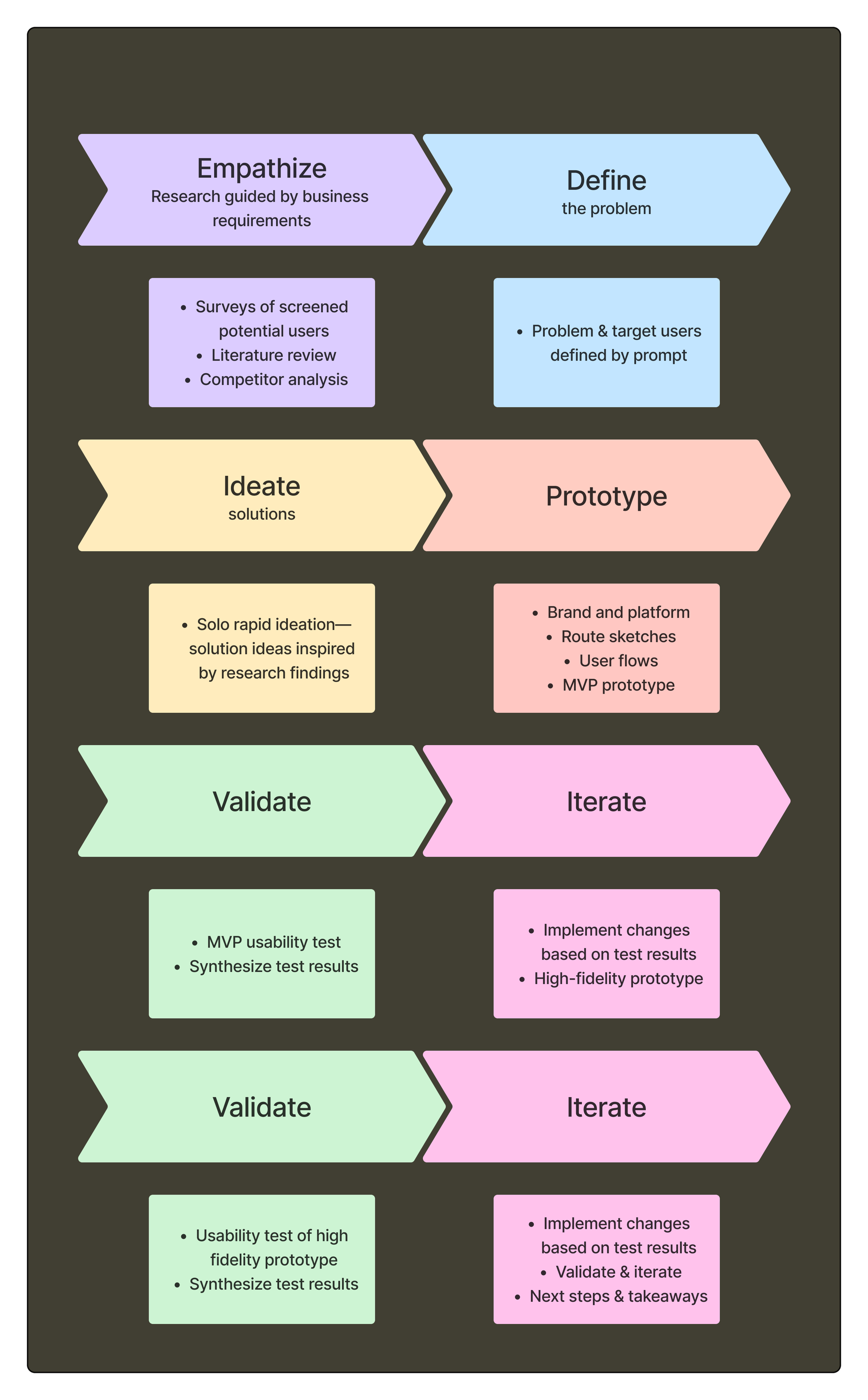
empathize; research; ideate; design; test; iterate
Tools
Figma; Figjam; Google Forms; Adobe Illustrator
Goal
Redesign an existing social events app to increase event conversion rate—the percentage of users who register and actually attend.
tl;dr
Events apps are nimble platforms designed to efficiently connect people with similar interests, make lasting and/or fun connections, and spread the benefits of friendship.
These apps work best when guests actually attend the events.
According to my research,
Guests attend events more often when:
Hosts reach out to them individually, creating a personal connection.
Hosts understand and incorporate what makes their community of event-goers different.
So, I researched, prototyped, and tested an app to incorporate regional specificity and individual correspondence into the event-planning process.
Time-constrained Design Process
Context
Havens began as my second and final capstone project for Springboard’s UX/UI Design program. The provided prompt allotted me a limited number of hours to complete a design—from exploratory research to prototype iteration. I selected a prompt which asked me to help an existing business re-design their mobile app and brand with this business problem:
The existing app struggled with low attendance rates. The prompt asked me to explore how UX/UI improvements could:
Reduce the drop‑off between registration and attendance
Improve user confidence and clarity
Support hosts with better tools for motivating their guests to attend
As a first step, I created the following project plan, strategically dedicating my limited hours among the required steps.
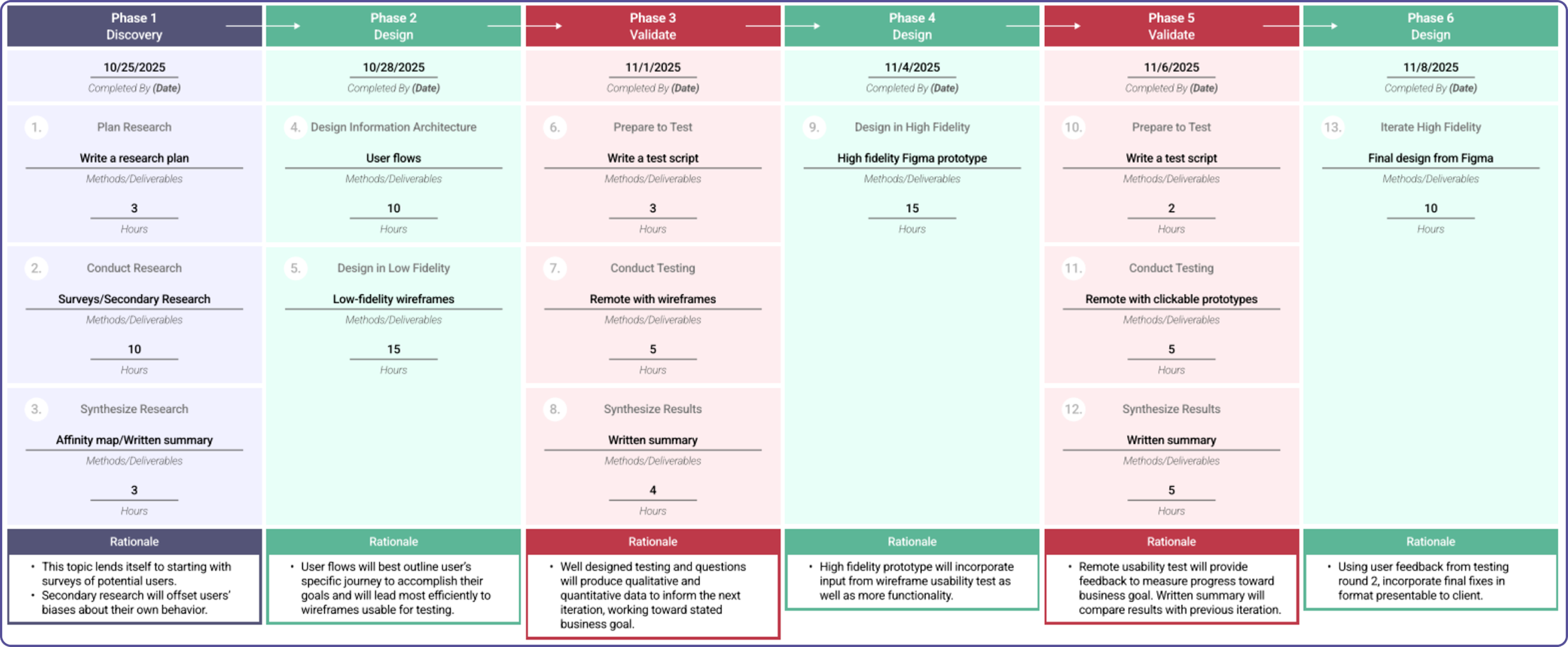
I chose to focus my time on:
Exploratory research to make sure I set out from the beginning to solve the right problem
Sketching user flows and wireframes to quickly test the information architecture and functionality of my solutions
Iteration: changes based on findings from usability tests at every step of the process
Research
Objective
Identify the most realistic and effective ways to incentivize those curious about attending social events to follow through and attend the events, satisfying the business goal of Havens.
Methodology
To maximize efficiency in defining and understanding the problem, I chose three research methods:
Web Form Surveys (primary research) to hear from potential users in their own words about how they decide which events to sign up for and attend and what they hope to accomplish with web-based event platforms
Academic Literature Review (secondary research) to gain a data-backed understanding of the psychology of potential users, how other businesses have tried to solve my problem, and how to best help users make new friends
Competitive Analysis to learn from those already trying to solve the problem of event attendee conversion rate, and understand how their methods line up with my research-informed understanding of the problem
Research Questions
What barriers prevent users who sign up for an event from actually attending the event?
Which tools most effectively help event hosts maximize attendance?
What are the most effective methods used by current industry leaders for increasing conversion from sign up to attendance?
Primary Research: Survey Results
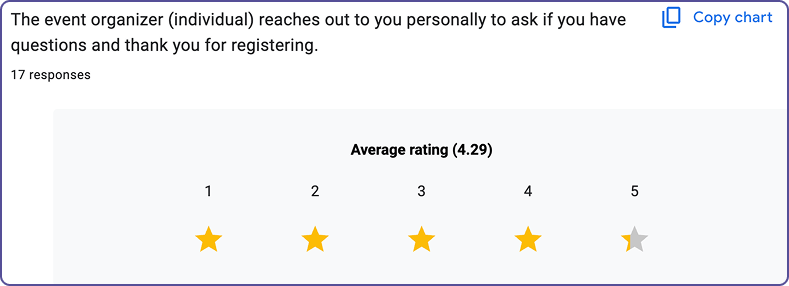
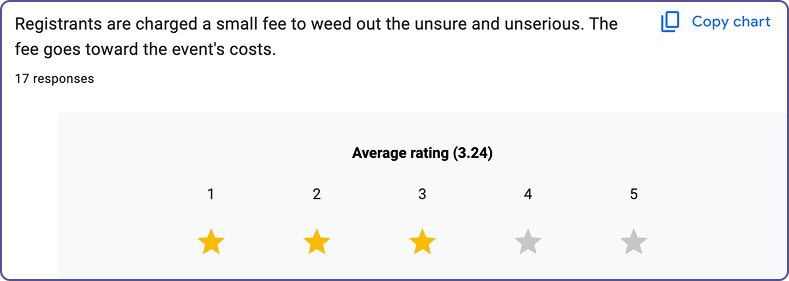
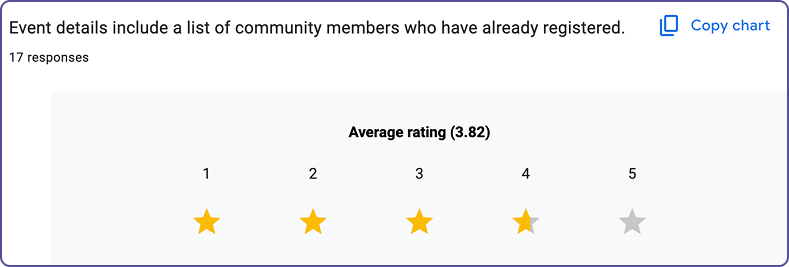
To make sure I was solving the right problems, I surveyed 17 potential users, representing a wide range of ages, all of whom had experience with using event-planning apps to either plan or attend events. Part of this survey asked participants to rate between one and five stars how effective each of a list of strategies would be at encouraging them to attend an event for which they’ve already registered. The highest rated strategy is on top.
Two others which received notable ratings are below it.
Secondary Research: Literature Review
Academic literature on EBSNs (event-based social networks) is limited, and industry leaders tend not to publish their own research, hoping that this will help them retain their advantage in the market.
The largest study on EBSNs I could find in the scientific literature surveyed thousands of events on all major providers in an attempt to find what leads to more engaging events for guests and more successful events for hosts. In short, their data showed that the success of events, using metrics benefitting hosts (such as attendance and attendance rate), was heavily dependent on how different geographic regions respond to factors in varying ways.
For example, business events in Seattle’s residential neighborhoods perform terribly, while interest-based events perform much better. In New York, business events perform well across the entire region. This pattern, and patterns like it, hold steadily across regions because of infrastructure, cultural differences, and which industries are robustly represented in the population. This meta study ultimately used their findings to recommend that event hosts and EBSNs learn about and rely on knowledge of individual community traditions, history, and culture, rather than trying to apply best practice methods to entire market.
Competitor Analysis
After my primary and secondary research, I studied the three most successful industry leaders in the event-planning app space: Meetup, Eventbrite, and Facebook.
Meetup
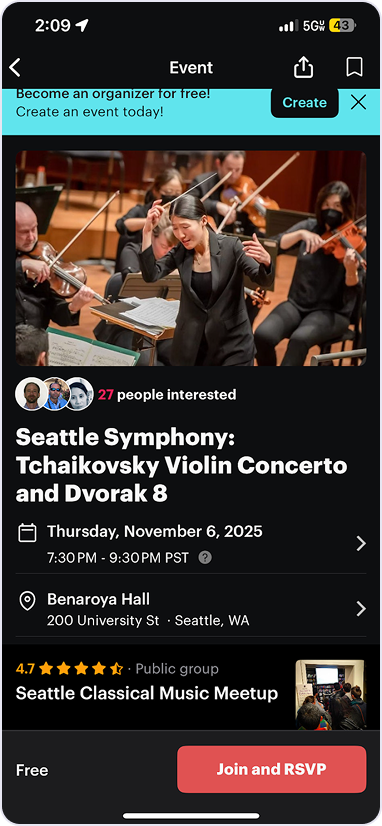
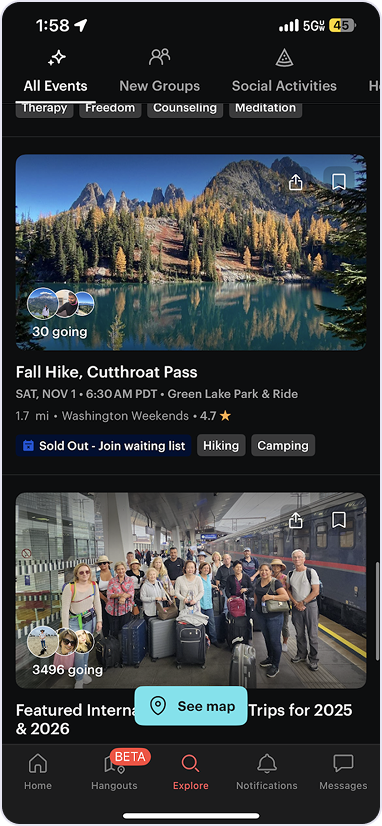
On Meetup, users join interest groups in their area and register for and attend events organized by those interest groups. To access many of the app’s features, like seeing who else will be attending the event and sending more than a few messages, Meetup charges a fee. By doing so, Meetup tries to reduce registration by guests who are least likely to actually attend events. Additionally, event registrants can view a roster of expected guests for their event, removing some of the anxiety associated with meeting strangers.
In my survey research, charging a fee to weed out unserious attendees and visibility of an event roster scored 3.2 and 3.82 stars, respectively—lower than strategies I chose for Havens.
Facebook Events
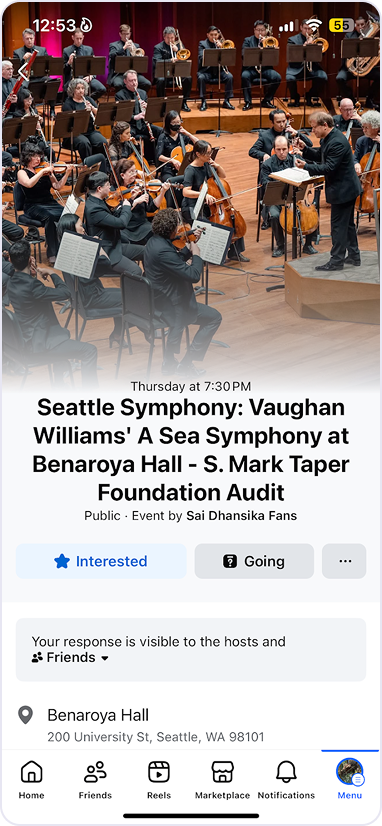
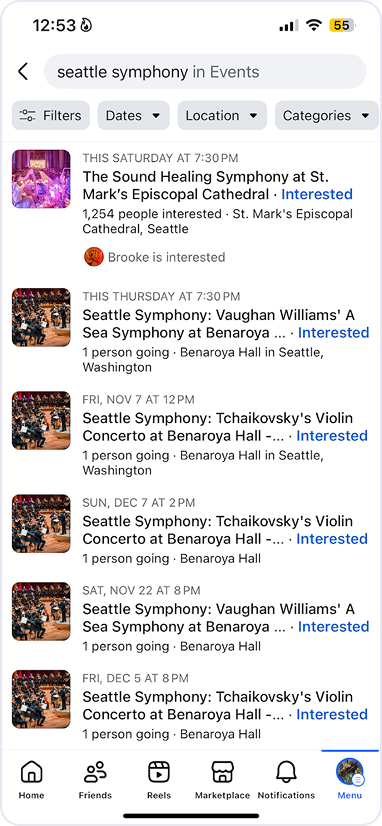
Facebook relies on its extensive pre-existing social network and “groups” features to feed its “events” platform. The primary goal for Facebook Events is to create social pressure for attendance. If a user indicates on Facebook that they plan to attend an event, that creates social pressure for their friends to attend as well. Facebook requires little input to create a new event or to register to attend. I created an event in two minutes!
Two respondents to my exploratory research survey indicated (through long-form, qualitative, written response) that hosting an event on a major platform like Facebook would discourage them from attending. I also chose not to emulate Facebook’s methods because their business goal doesn’t seem to be maximizing conversion rate. Rather, they want events to see as many eyes as possible.
Eventbrite
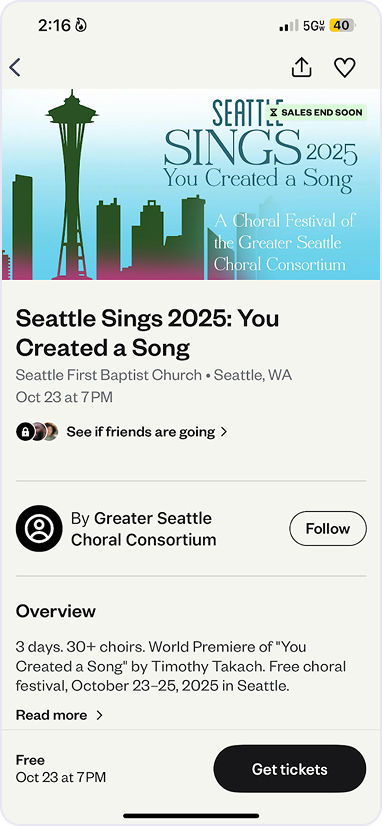
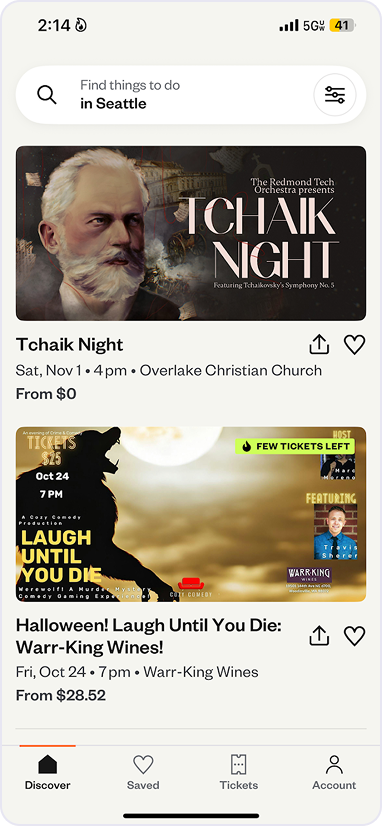
Eventbrite uses one major strategy to encourage attendance at their events: ticketing for events can be completed directly through their app. The aesthetics are sterile and customization is limited, but this strategy has one clear goal: if users reserve a ticket, they’re probably going to show up. However, events on Eventbrite appear to almost always be duplicates of events hosted on other platforms, making the attendance data they gather unreflective of actual attendance.
Key Research Findings
1. Personal connection increases attendance
The highest‑rated strategy from users involved receiving a personal message from the event host.
Users were far more likely to attend when they felt expected and welcomed.
2. A one‑size‑fits‑all UX won’t work—Havens hosts need location‑specific guidance.
Academic research shows that event success varies dramatically by region.
Certain event types thrive in some cities and flop in others because of cultural norms, and infrastructure.
3. Users need clarity to overcome social anxiety
The more information a host provides (guest list, agenda, parking, food, logistics), the more confident guests feel.
4. Industry leaders aren’t focused on conversion
Facebook focuses on scalability, not attendance
Eventbrite focuses on ticketing and logistics
Meetup uses financial commitment to discourage no‑shows, but this alienates some users
Implications for Design
1. Make personal communication effortless
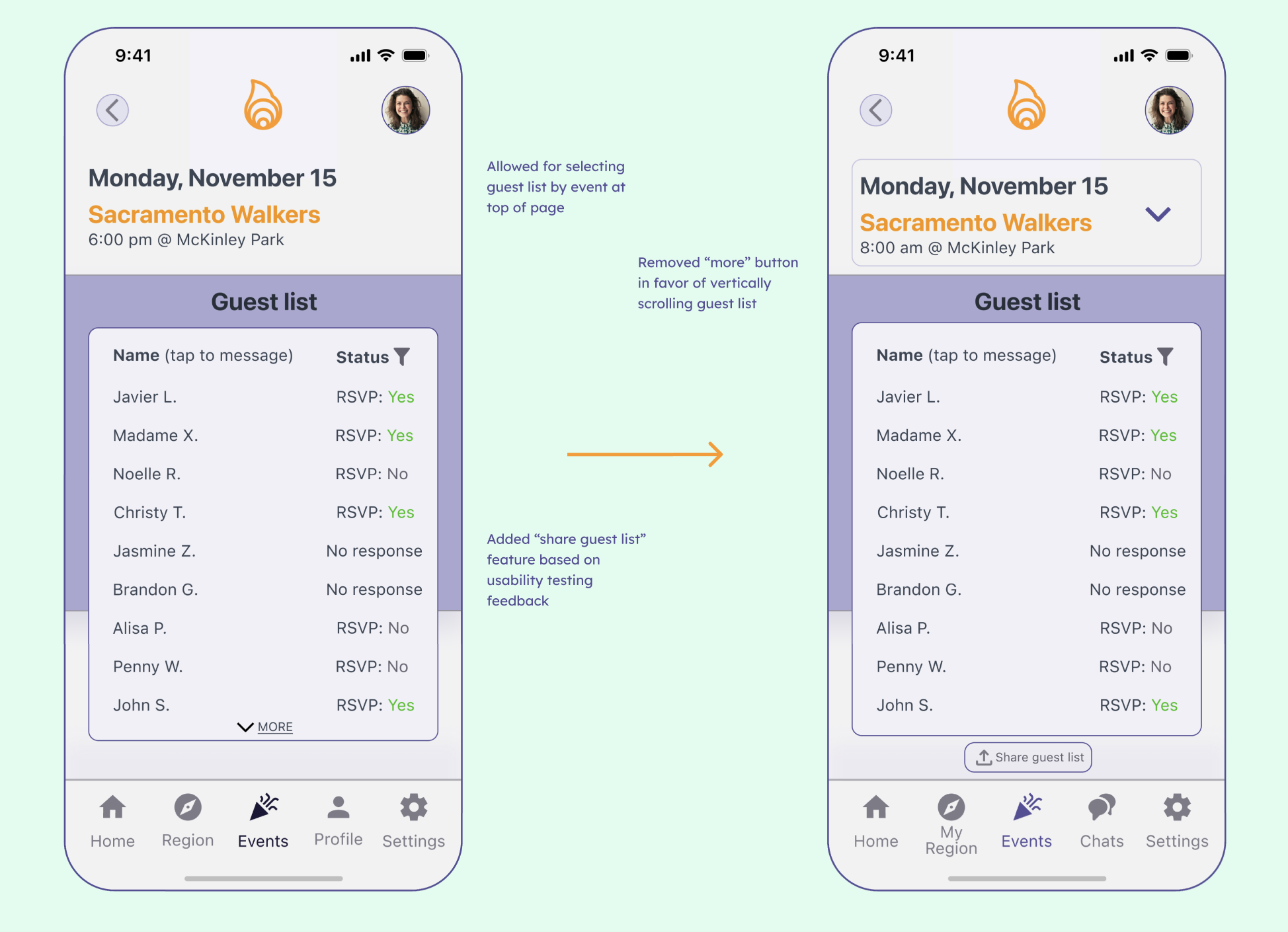
Hosts should be able to quickly message individuals or the entire guest list.
2. Provide region‑specific event insights
Let hosts learn from patterns unique to their area.
3. Make event details clear, visible, and complete
Guests should be able to quickly find key logistics.
4. Design for warmth, familiarity, and ease
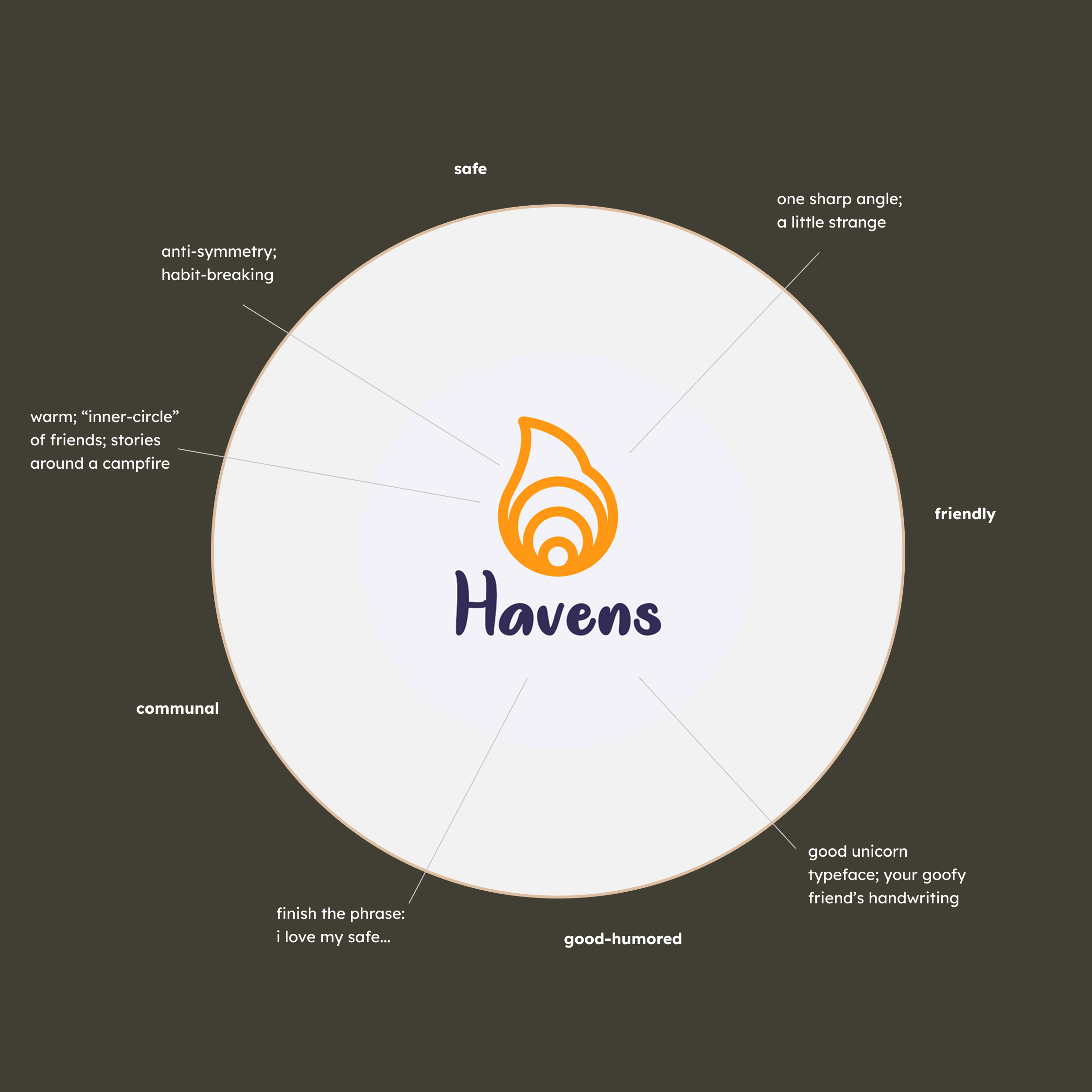
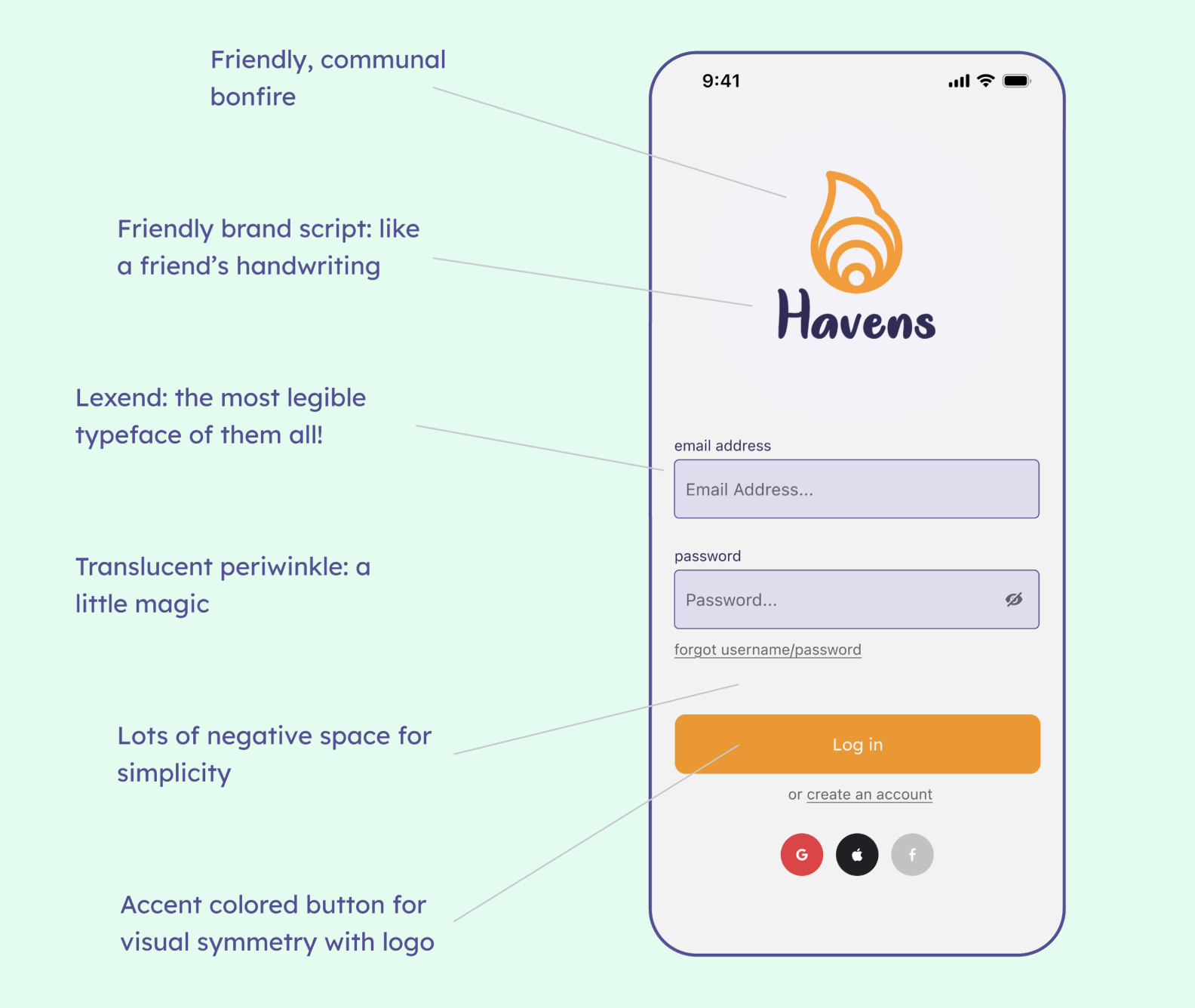
The brand should feel like an inner circle—friendly, safe, communal.
Design
User Flows & Sketches
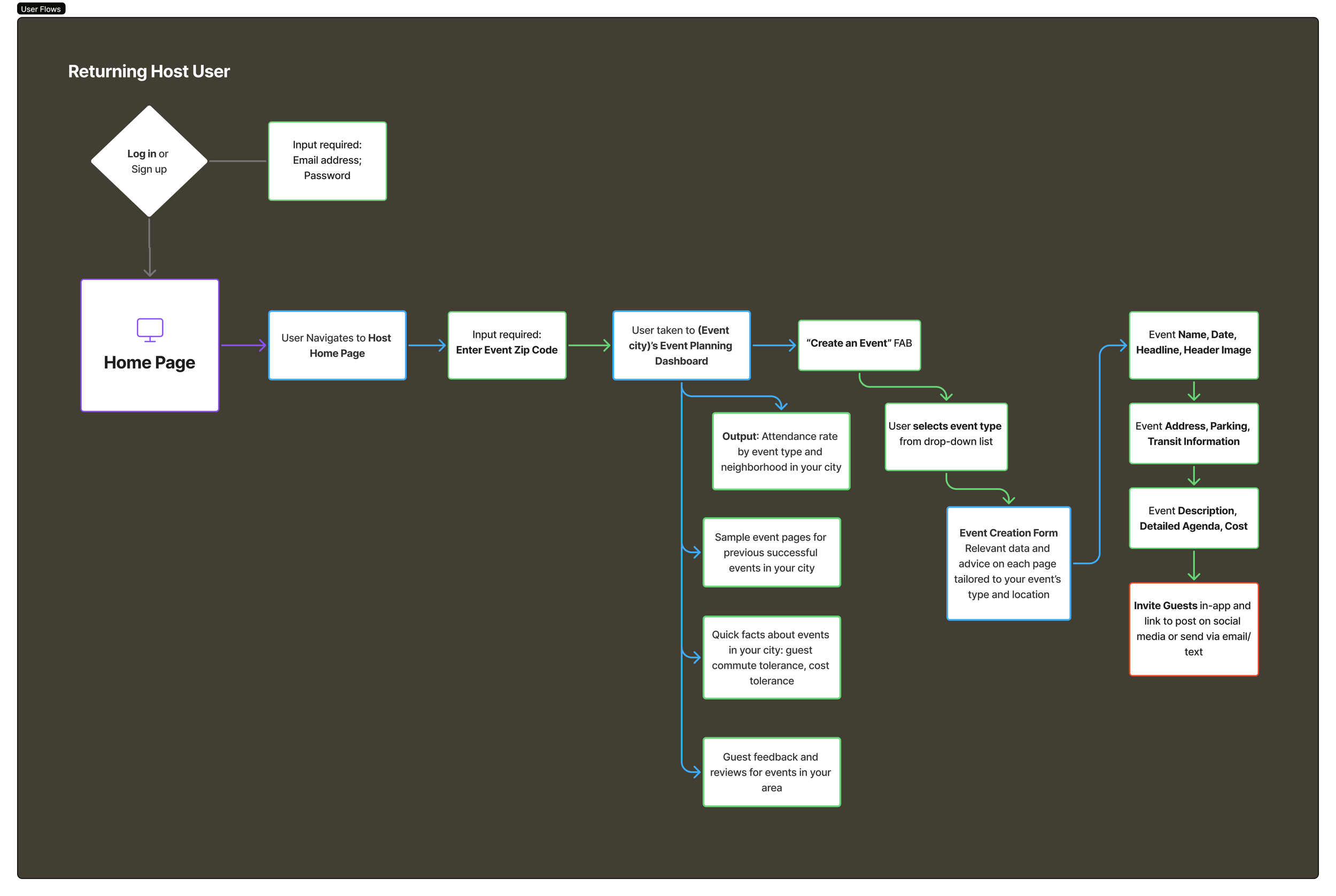
Armed with my study of the academic literature, survey results, and lessons from industry leaders, I chose two key strategies to maximize conversion rate on Havens, and turned those strategies into two Red Route User Flows:
Event hosts should plan their events informed by data about their unique community. This data should be captured and provided by Havens and incorporated into the event-planning user flow.
Hosts should be prompted and encouraged to reach out to each guests individually, creating a personal connection.
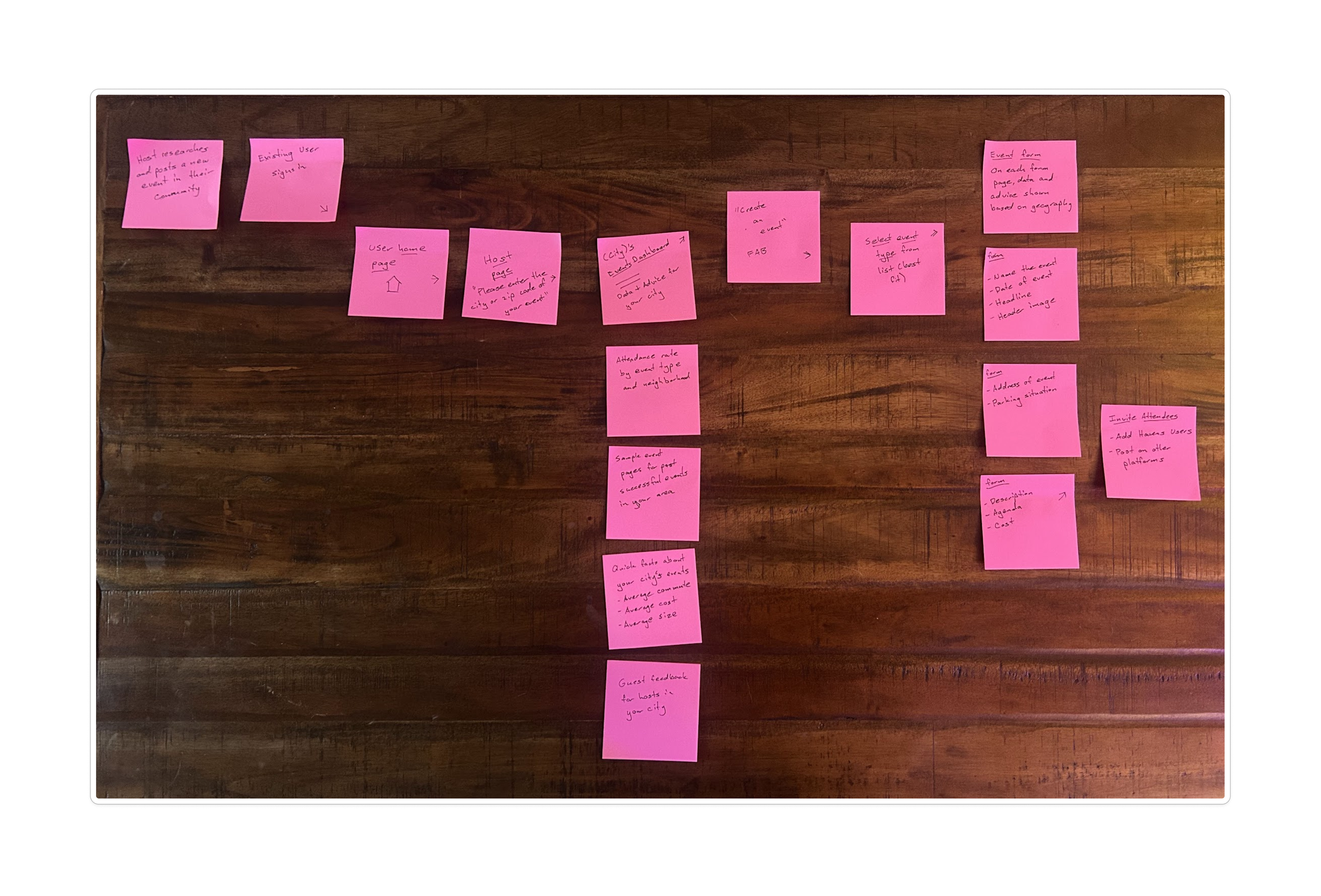
User Flow 1 - Host User Creates New Event
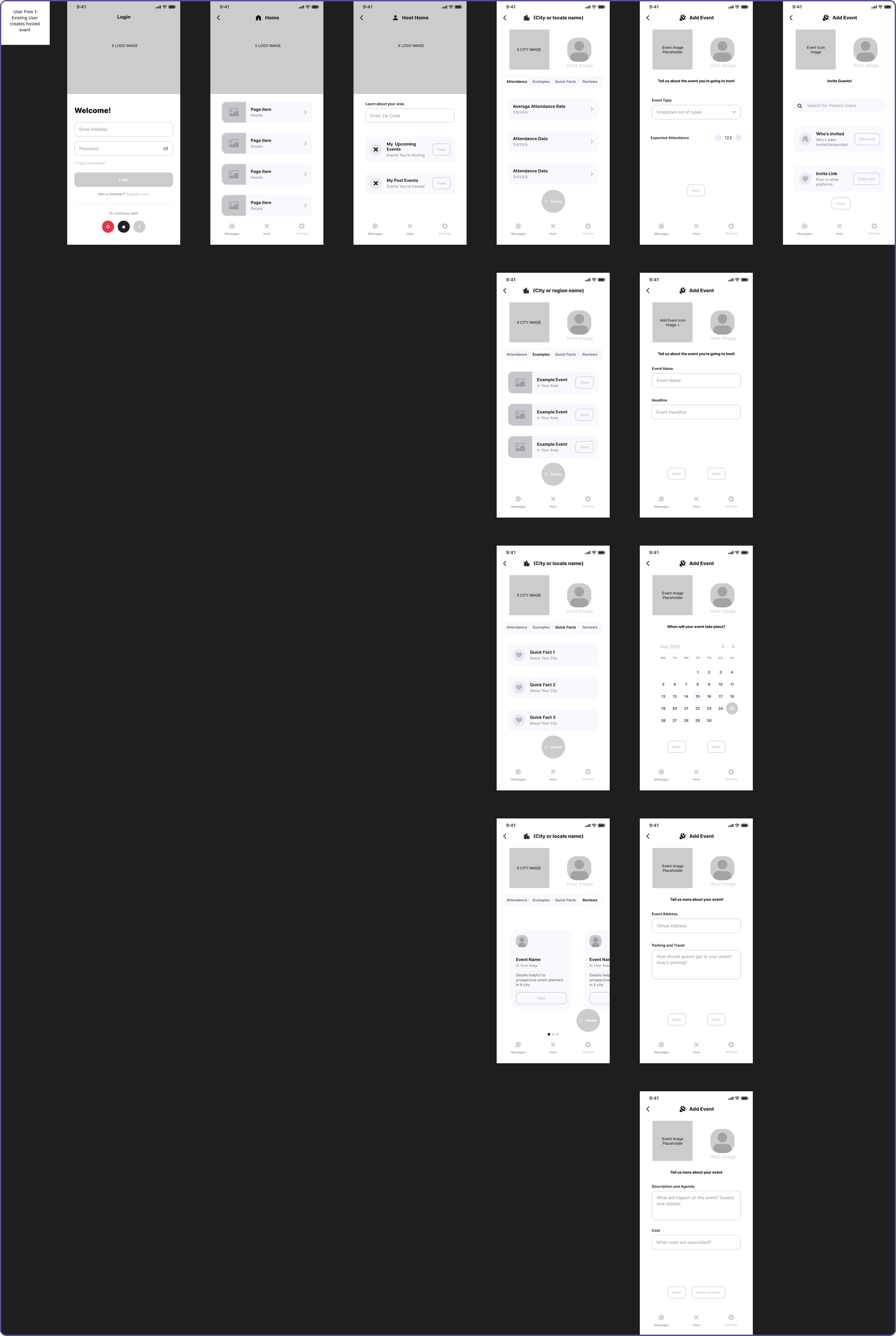
Wire frames
I then turned these user flows into wire frames, designed to rapidly test and iterate upon the information architecture and logic of the prototype. The first of these wireframes is below.
Usability Test 1
Wireframe usability tests yield helpful results around flow and logic, but aren’t very useful for solving problems with clarity, feel, and overall aesthetic impression. Here is a sample from the problem log for this first test:
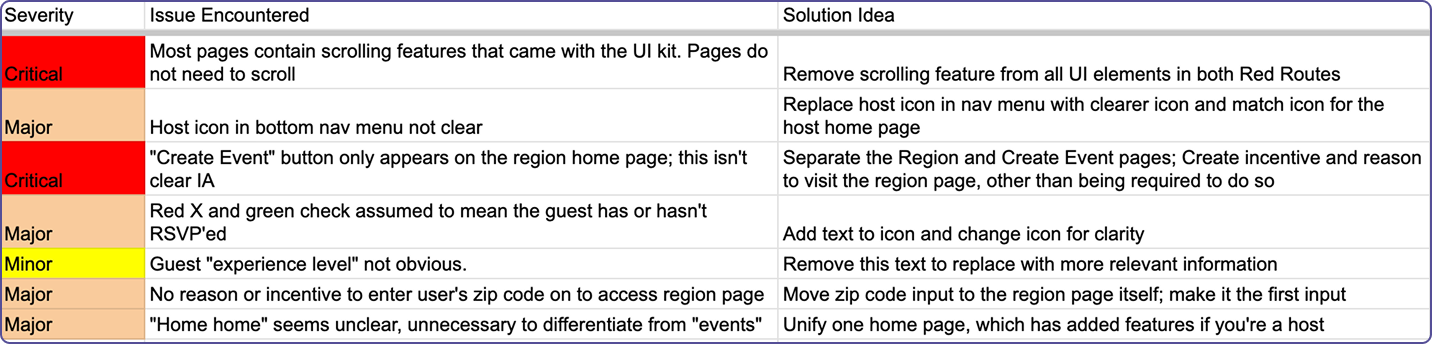
I quickly iterated on this low-fidelity prototype, fixed the issues above, and created my first high-fidelity prototype:
High-fidelity Prototypes & Iterations
Clickable High-Fidelity Prototype 1: Event Creation
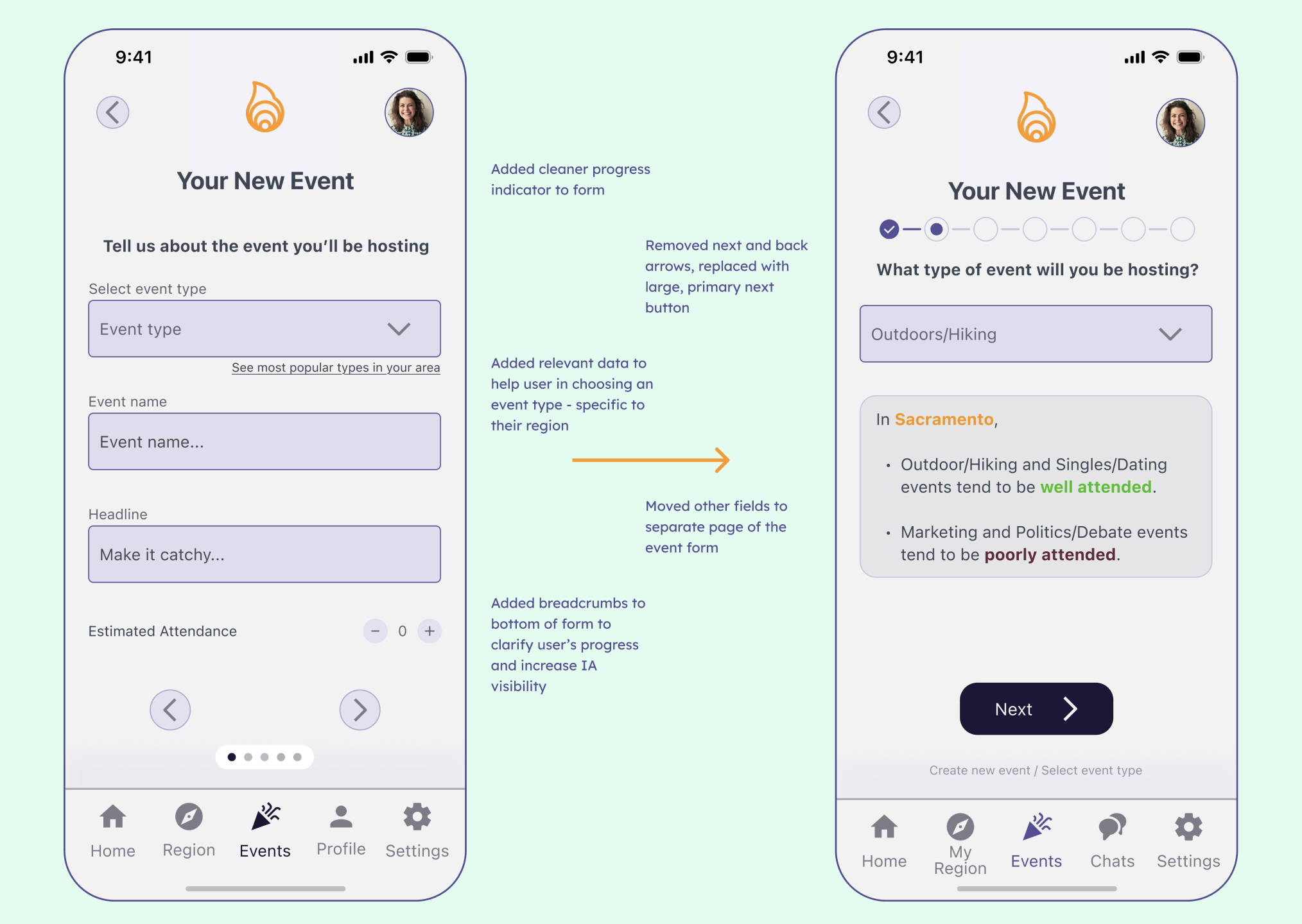
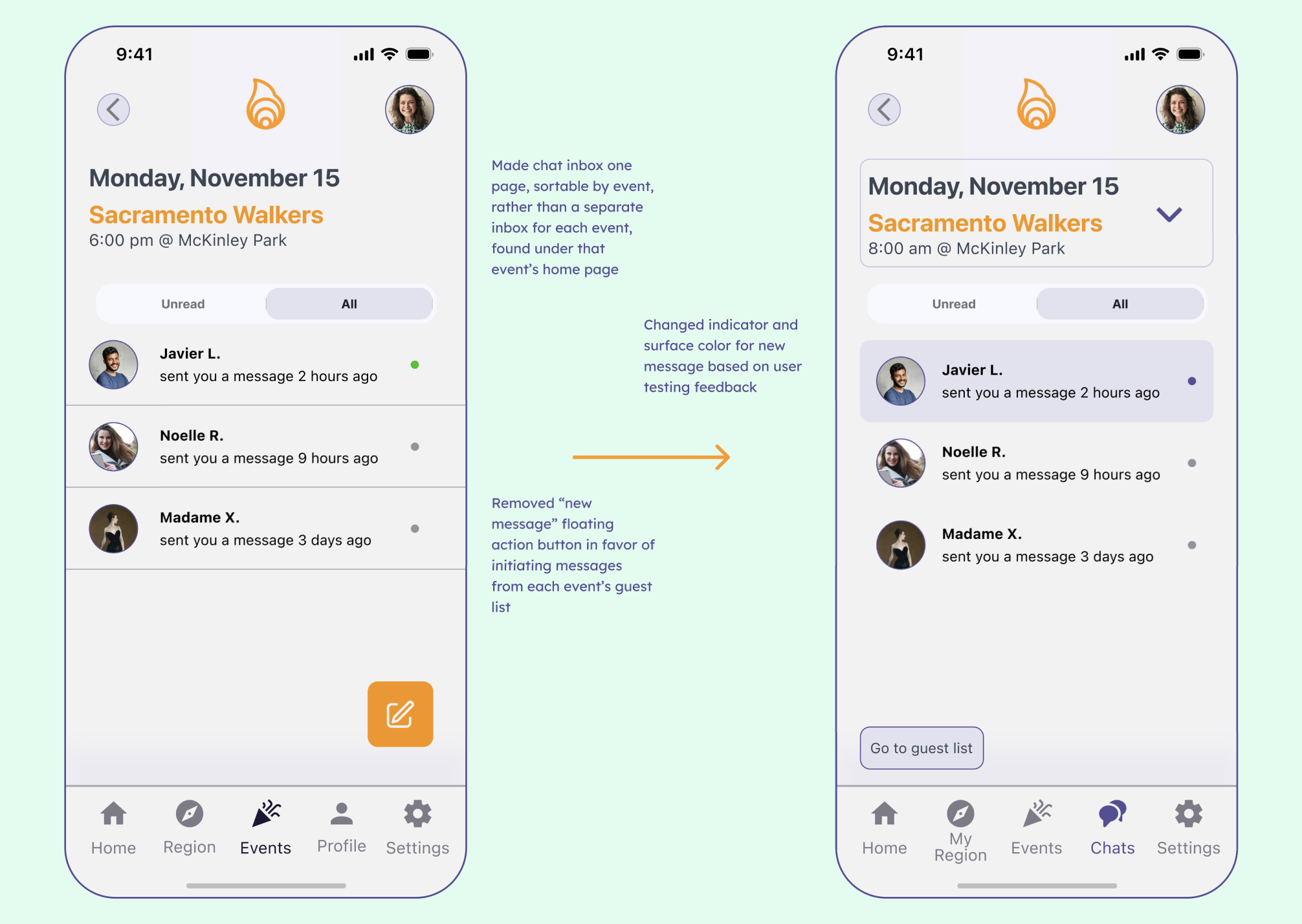
After I had completed the requirements for my Springboard Capstone project, I continued to iterate on and test my high-fidelity prototypes. Below are a few examples of larger-scale problems I encountered and solved, based on usability test results and repeated iteration.
Home Page
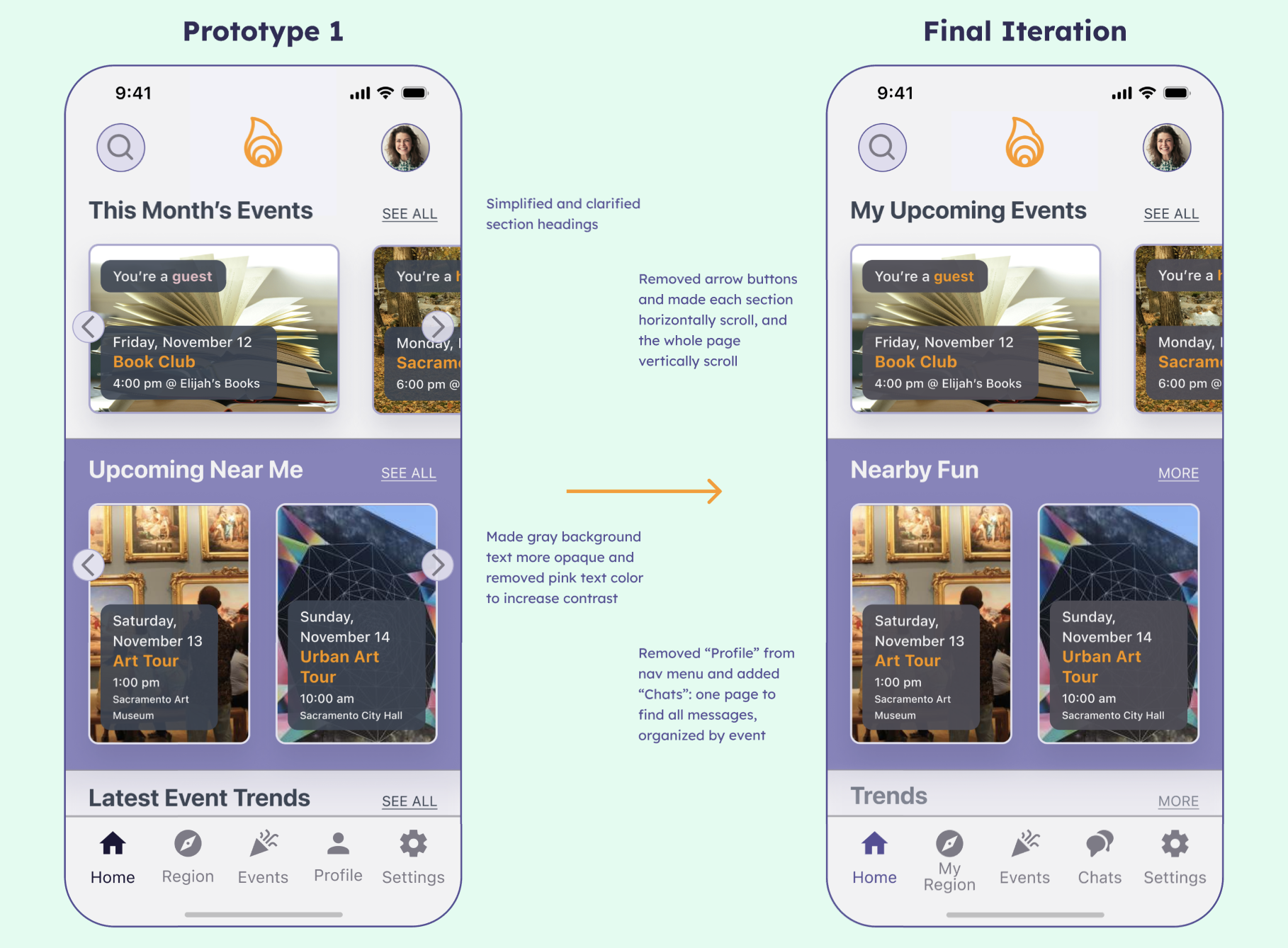
New Event - Type
Chat Inbox
Guest List
Next Steps
After three rounds of iteration on high-fidelity, clickable prototypes, I still have several features I would love to incorporate into this project, but which don’t fit neatly into the red routes I initially defined.
Project Weaknesses
Given the time limitations of this project, I chose a few steps important to Design Thinking to leave out. Specifically, this project ended up focusing mostly on the needs of the business, rather than solving actual problems for users. In retrospect, the steps this project missed most sorely were:
User Personas - My ideation and initial design steps would have benefitted from more specifically defining the needs of users according to their specific contexts. In future projects, I will do my best to not skip this step.
Group Ideation - Given more time and more minds working on this problem, I suspect we could have identified many more opportunities to inform our hosts about how to utilize data in planning their events.
Exploratory Interviews - Surveys provided me with useful quantitative data about the potential effectiveness of my proposed solutions, but skipping exploratory interviews meant approaching the problem with a solution in mind—a fundamental faux pas of Design Thinking.
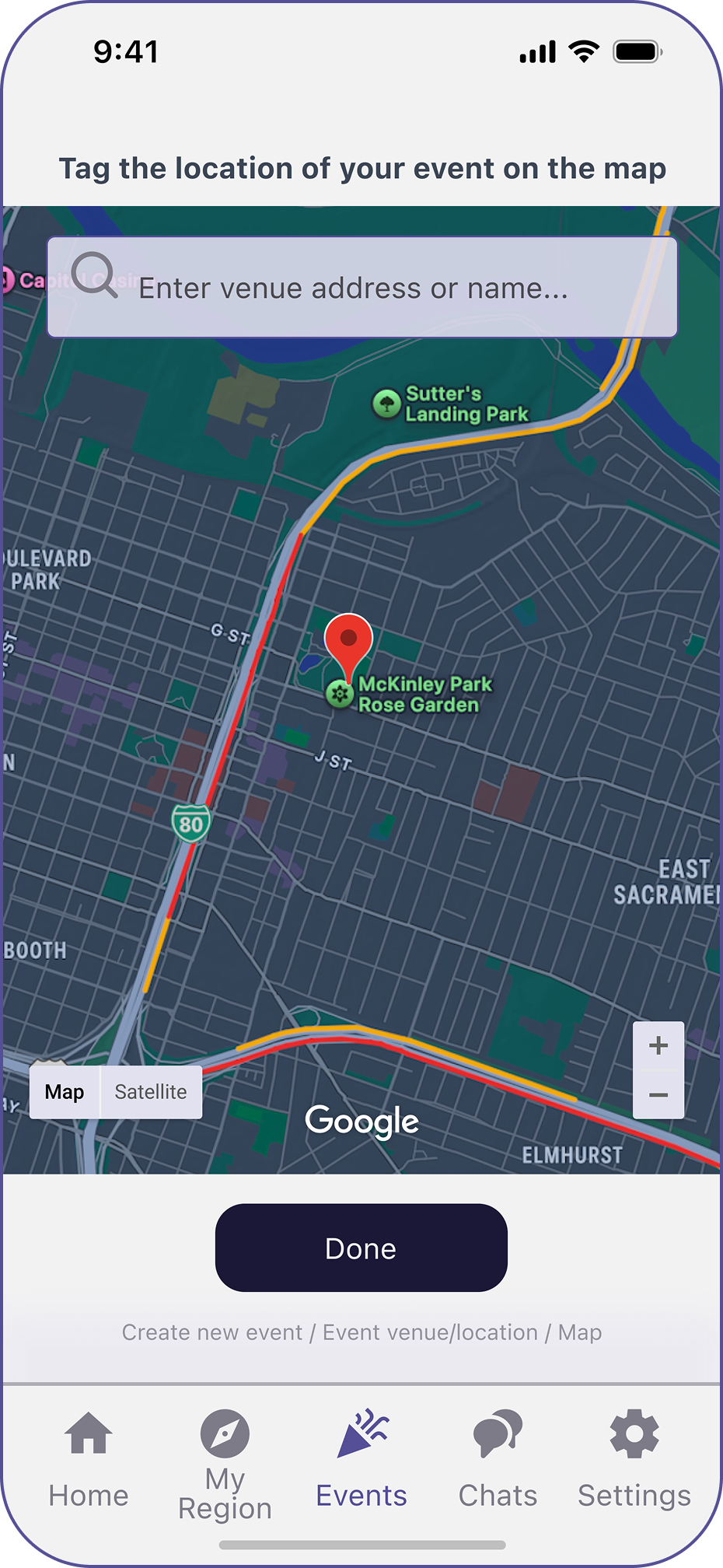
A specific, highly controllable filter function to search on a map and in a database for events near you
A database of reviewed and catalogued event venues accessible to Havens hosts, which they can search and select from, ensuring consistency across events and providing hosts with more location-specific hints to help them succeed
This app needs a way to measure success. How does Havens know if guests are actually attending events? This could be a QR code check-in or surveys of event guests.
Takeaways
In-depth exploratory research is essential. Both defining the problem with real users in mind and building off the work of academia and industry leaders ensures that effort isn’t being wasted solving problems that have already been solved or may have never been problems to begin with.
Rapid iteration and testing is a more efficient path to effective results than large-scale, long overhauls. I was able to iterate several times with my high-fidelity prototypes. This strategy quickly revealed which design challenges mattered most in achieving Havens’ business goal, and which challenges weren’t important.
My most important learning took place during quality time spent with users in my prototypes. I could have designed a limited, functional prototype quickly and hastily, but the effectiveness of my proposed solutions would have suffered mightily without ample time dedicated to moderated user testing.