TeamWell
View Fully-formatted PDF Edition of Case Study
Overview
-a research-driven UX project addressing why restaurant workers feel pressured to work while sick—and a prototype solution that improves communication, supports better scheduling, and builds a healthier restaurant culture.
Takeaways: In my experience, no one has quite cracked the complex problem of staff sickness and absence, and how this problem interacts with social pressures, business needs, and individual incentives.
Restaurant staff consistently work while they’re sick, infecting each other and customers.
Planned staffing redundancies can remove the social pressure to work while sick without increasing labor costs.
KPI’s: Staff satisfaction and retention rates; Productivity per dollar of labor spent
The Context
During my time in dining, both as a bartender and restaurant manager, I found myself involved in regular uncomfortable conversations around illness and absence. Two particular events left me feeling frustrated, hurt, and determined to find a better way to handle the conflicting and intensely personal forces and feelings which color situations around sickness and work. From talking with friends with friends, I learned I wasn’t the only one who felt this way.
Far from it!
Because of competing business, social, and personal pressures, illness at restaurants is a serious sore spot for industry workers and, as I learned in my research, a proven cause of disease outbreaks. Servers, bartenders, baristas, and cooks work while they’re sick—
And whatever the cause, that shouldn’t happen.
The Problem
How Might We support restaurant staff to advocate for their need to stay home when they’re too sick to work?
How Might We reduce professional pressures for staff to come to work when they’re sick?
How Might We inspire collective restaurant work cultures to encourage their staff to stay home when they’re sick?
My Role
Exploratory, background, and user research; Team and solo ideation; Sketching; Wire framing; Low and high fidelity prototyping; Usability testing; Product iteration
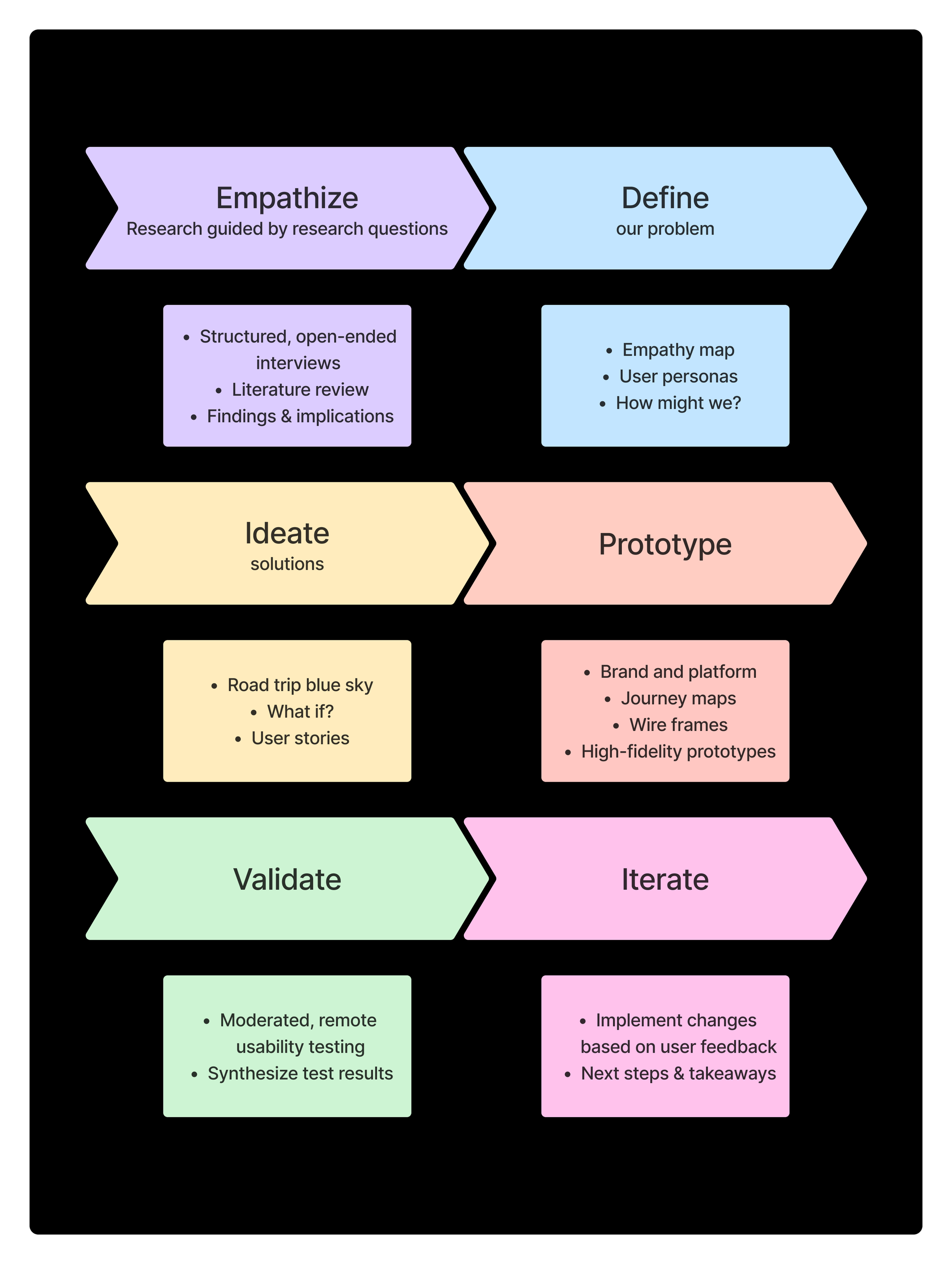
The Process
Research
Research Questions
What leads to restaurant employees working while sick?
How serious/widespread is this problem?
What are the real-world consequences?
What are the root causes of presenteeism?
What forces and pressures have led you to work while sick?
How have you seen workplace culture interacting with presenteeism?
Research Methods
Primary
User-screened open-ended interviews with former and current food-industry workers
Secondary
Academic literature survey
Research Findings
Literature Survey
Presenteeism (the practice of restaurant staff working while they’re sick) is a common, consistent problem, with one CDC study finding that nearly every single restaurant worker surveyed had worked while likely contagiously sick (CDC, 2014).
Disease outbreaks caused by presenteeism lead to hundreds of deaths every year (Morittz, 2023).
Presenteeism is the result of communication between owner, manager, and staff in a restaurant and consistency of the application of sickness policies.
Potential User Survey
Every one of the potential users I interviewed reported having knowingly worked while sick during their time in food service.
None of them blamed their manager for their decision to work while sick.
Two of five reported that money was a factor, but not the most important factor.
Every one reported that the most important factor leading to their decision to work while sick was a desire to support their friends at work and not let them down.
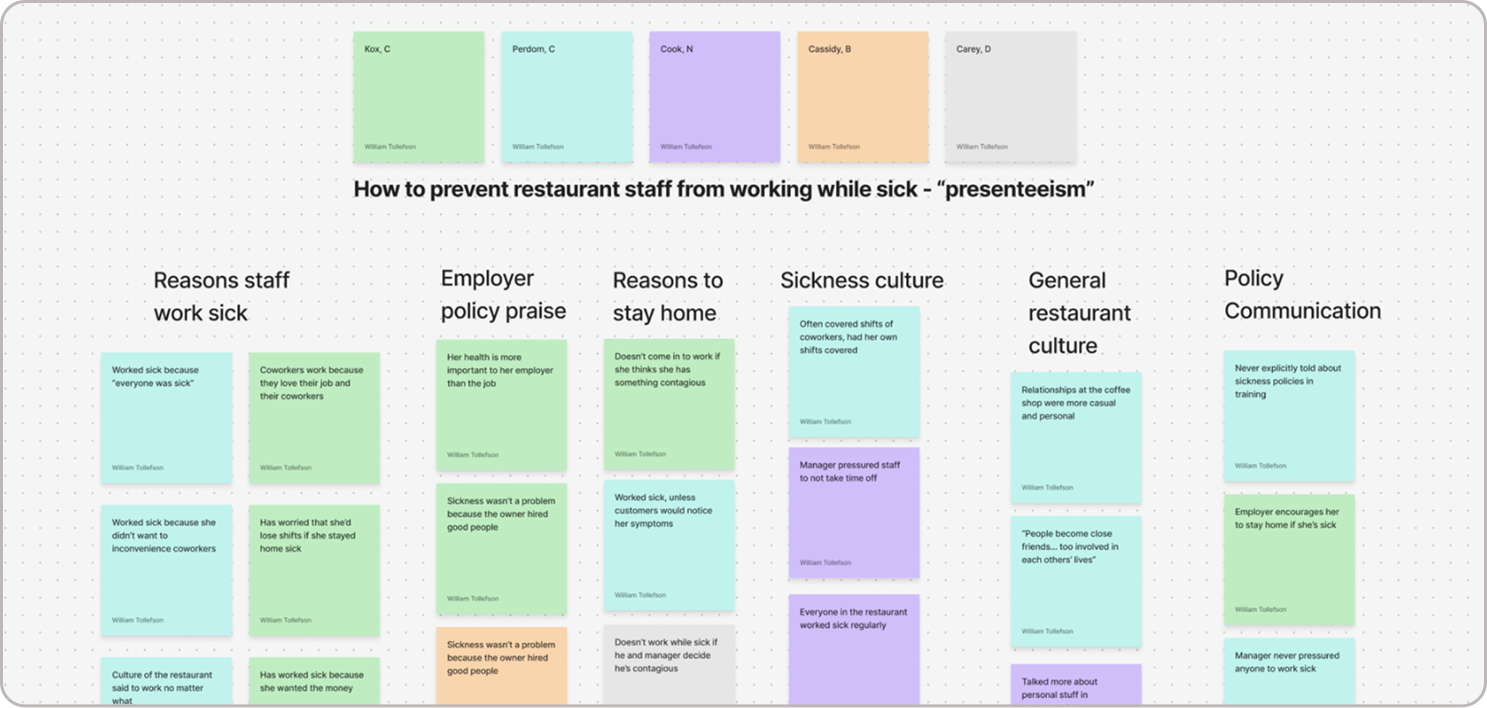
With my research findings, I created an empathy map, categorizing what I learned:
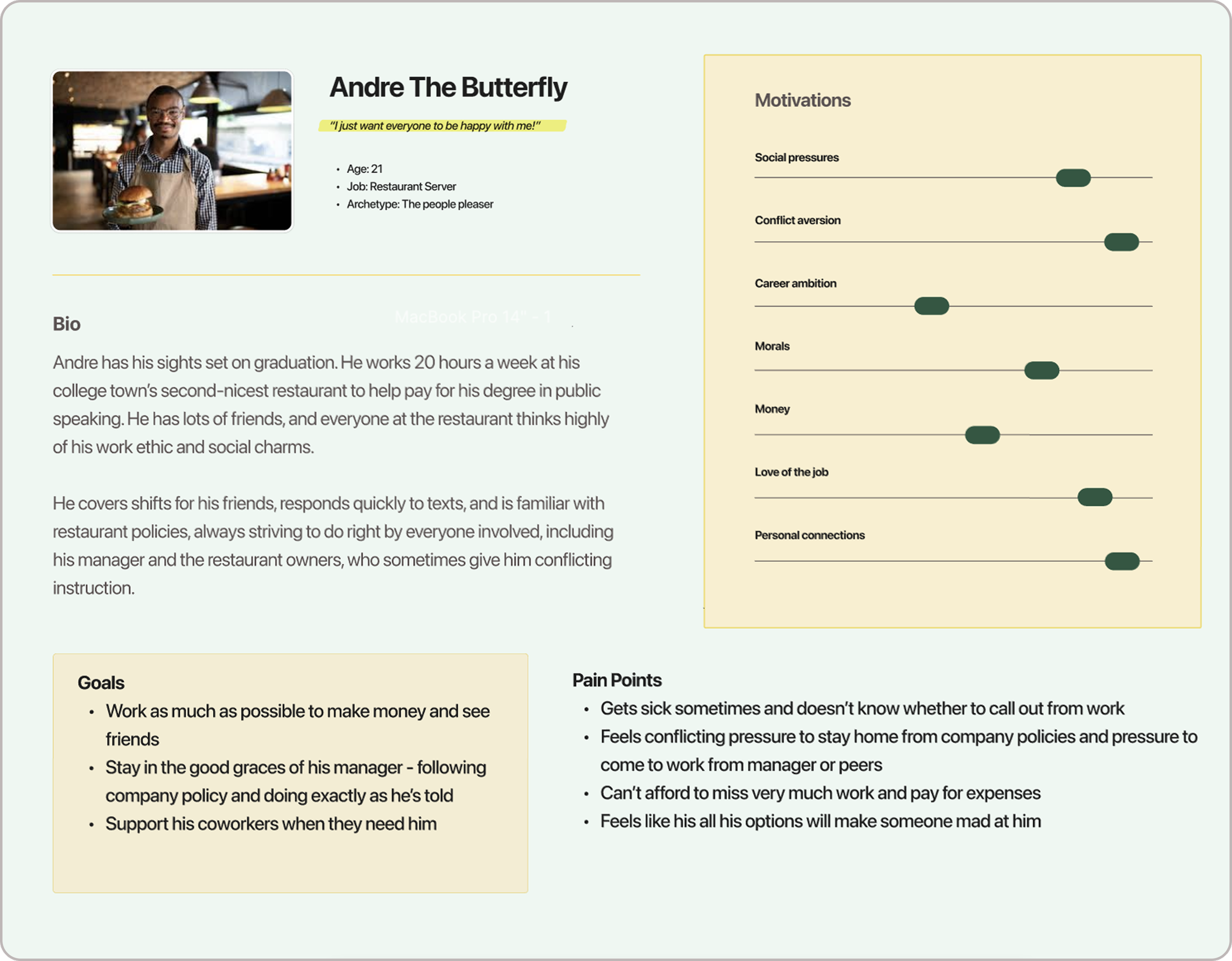
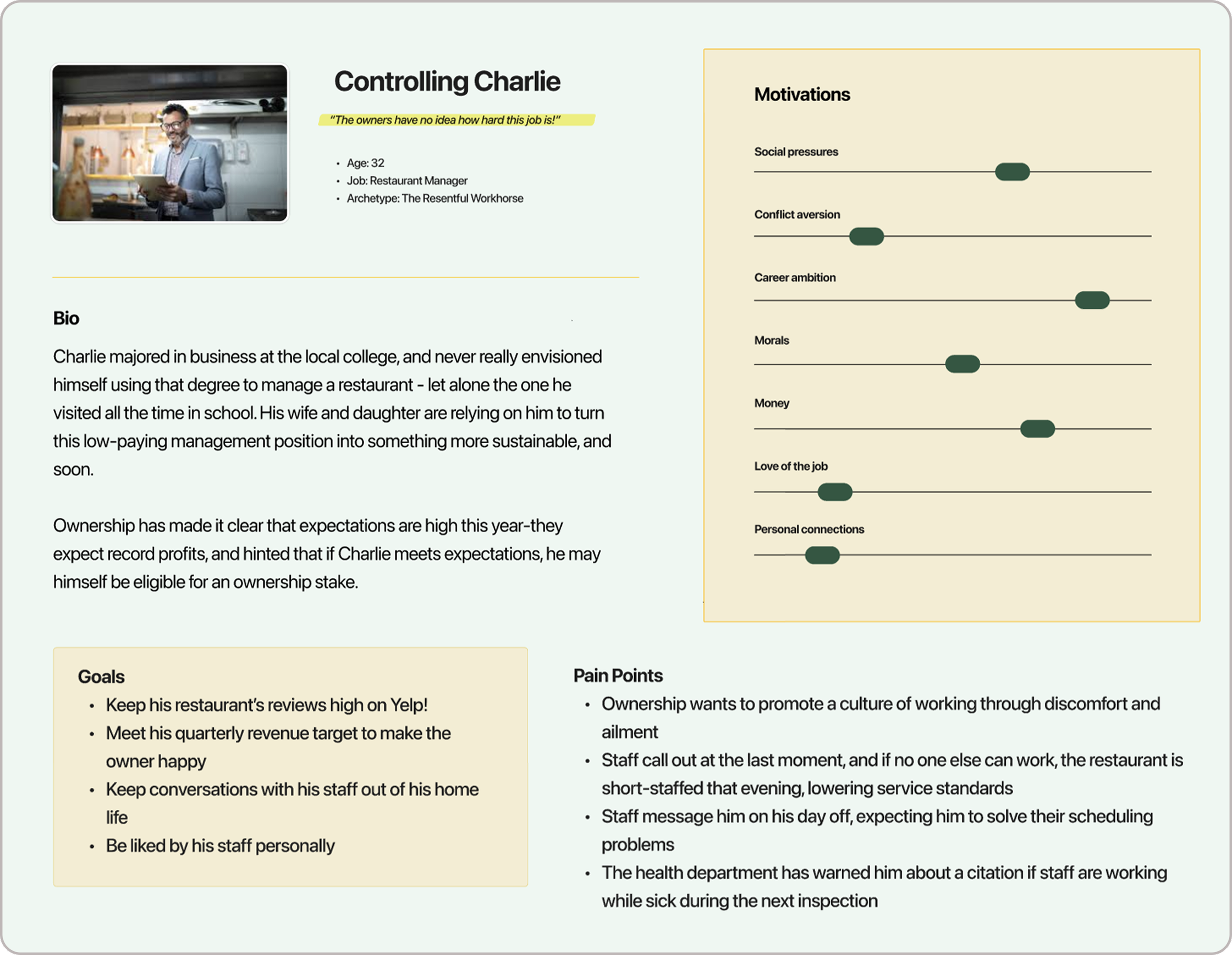
User Personas
Ideation
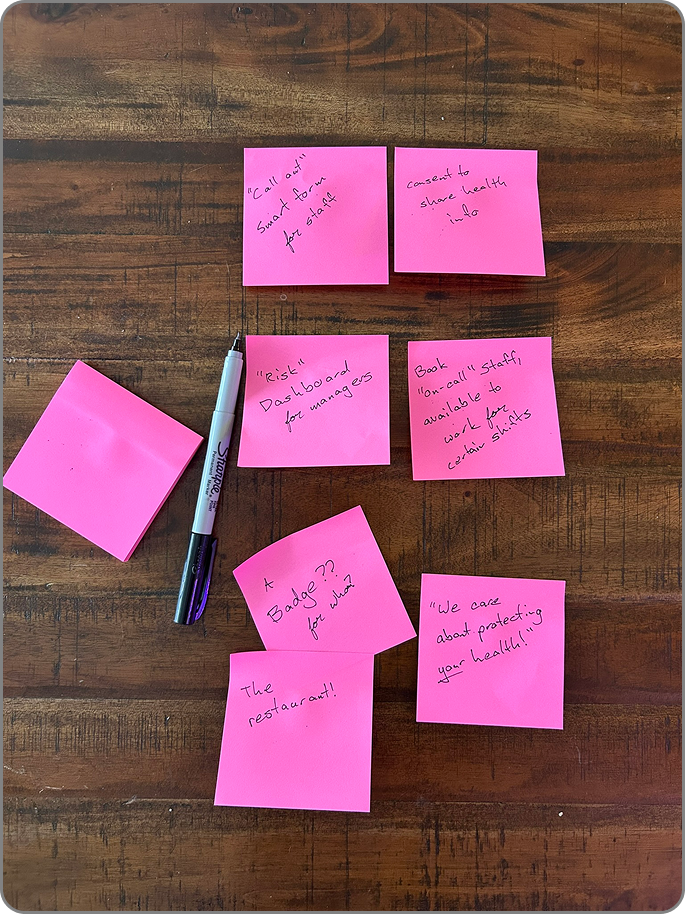
On a road trip along the North Shore of Lake Superior, a small group of family and friends brainstormed, wrote down ideas, sketched, and argued over how to solve the problem of restaurant presenteeism and its resulting spread of sickness. These are our best ideas:
Problems
Restaurant culture is the most important factor leading to presenteeism. How can a restaurant attract and retain the type of staff needed for a culture in which presenteeism does not occur?
Employees work while they’re sick because they don’t want to disappoint their peers or leave their team short-staffed.
Staff don’t know company policy well enough to know how sick they have to be to call out from work. And they feel guilty and afraid to ask their managers to weigh in.
Solutions
What if restaurants could display a badge on their menus and websites to communicate to potential employees and customers that they take steps to prevent the spread of disease at work and promote a work culture of protecting the health of your coworkers?
What if managers could use business projections data to schedule “on-call” employees for busier shifts?
What if staff could use an electronic form to report their illness symptoms to a professional who would produce a recommendation for them and their employer, based on those symptoms?
User Stories
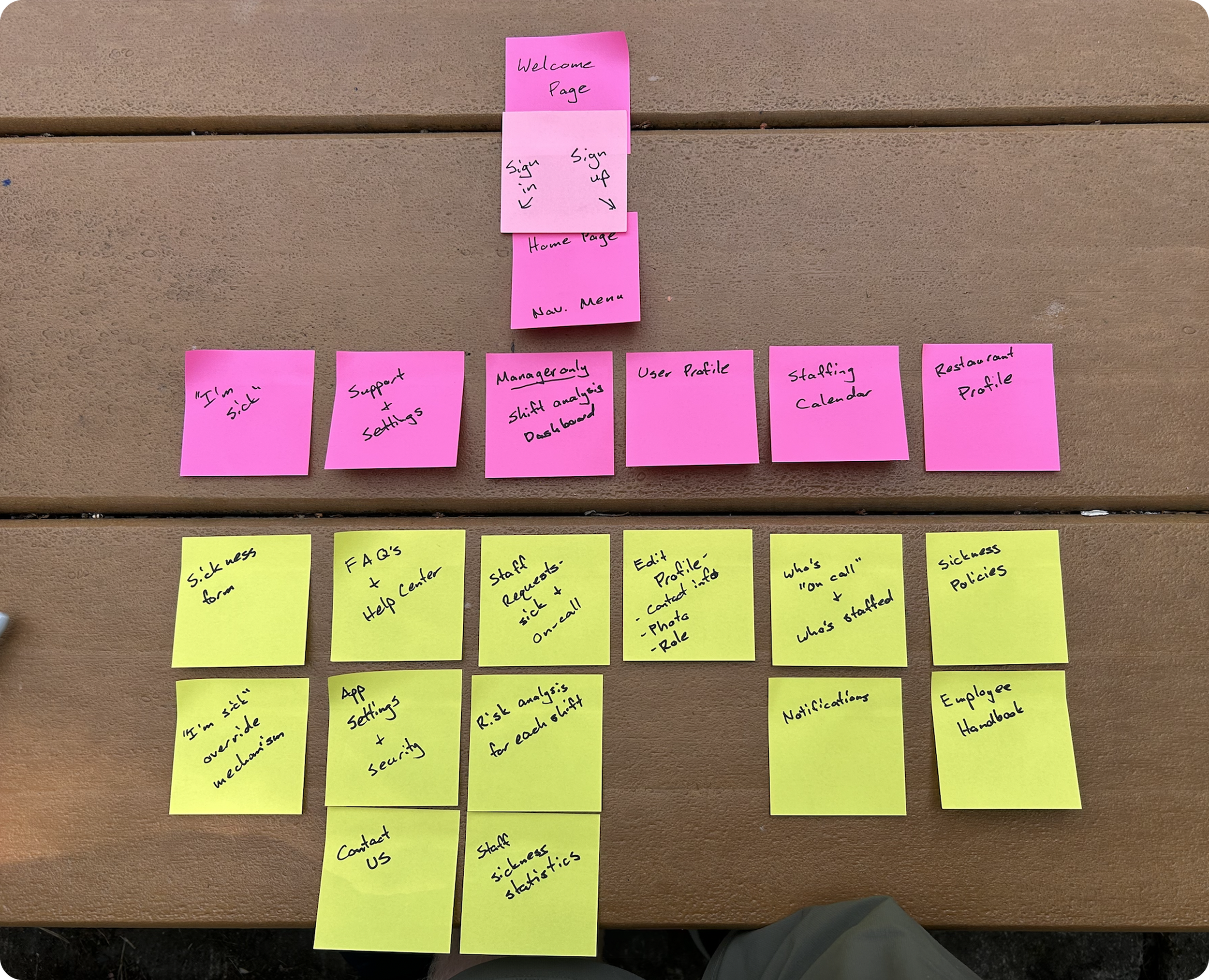
Using the ideas produced in ideation sessions, I wrote and arranged three user red routes to accomplish the most fundamental functions of our proposed solutions.
Solutions Prototyping
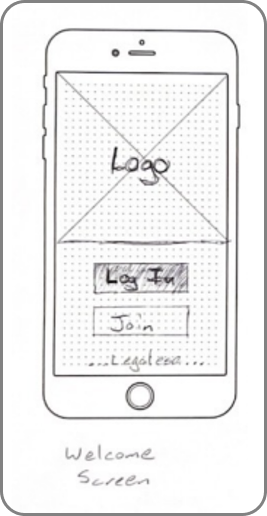
(three examples from the design process)
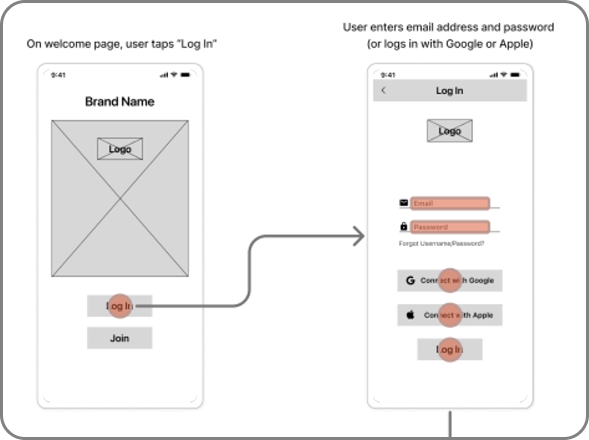
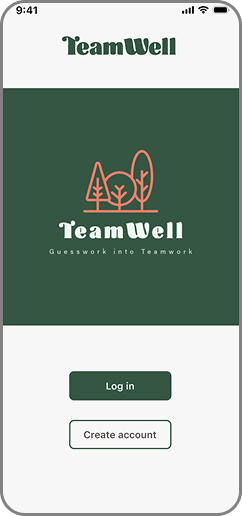
Login
Sketch / Wire Frame / Prototype
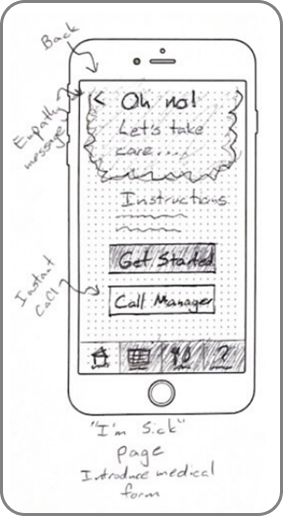
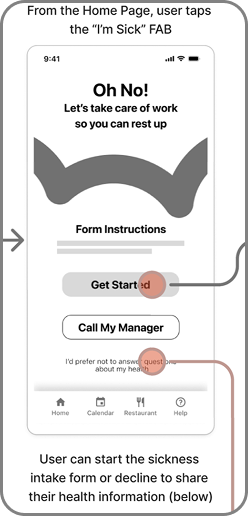
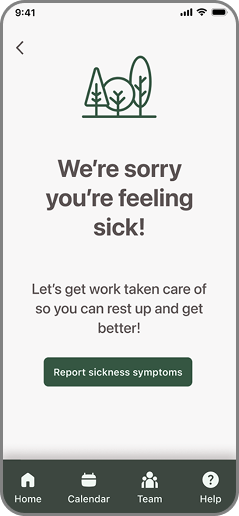
Sickness Result
Sketch / Wire Frame / Prototype
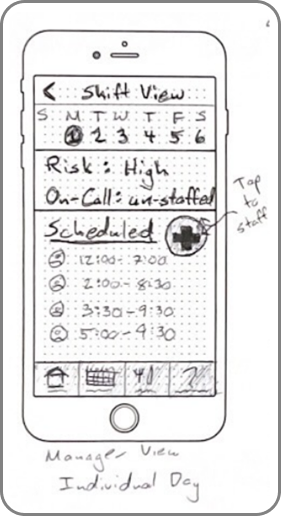
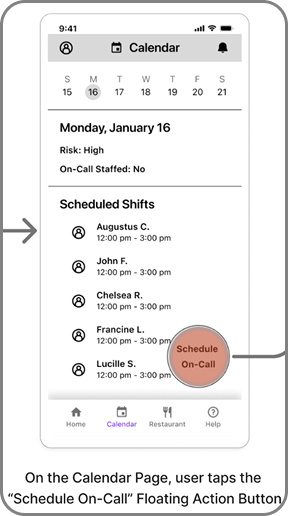
Calendar
Sketch / Wire Frame / Prototype
Brand Platform & Design System
After basic prototyping, I chose a brand mission, personality, and attributes, all based on my initial exploratory research.
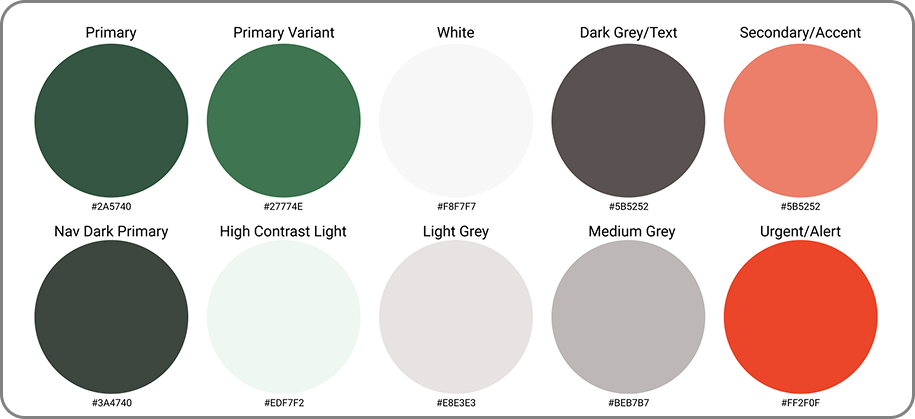
I designed a color system, featuring pine green and smoky orange, defining the brand’s cozy, autumnal aesthetic.
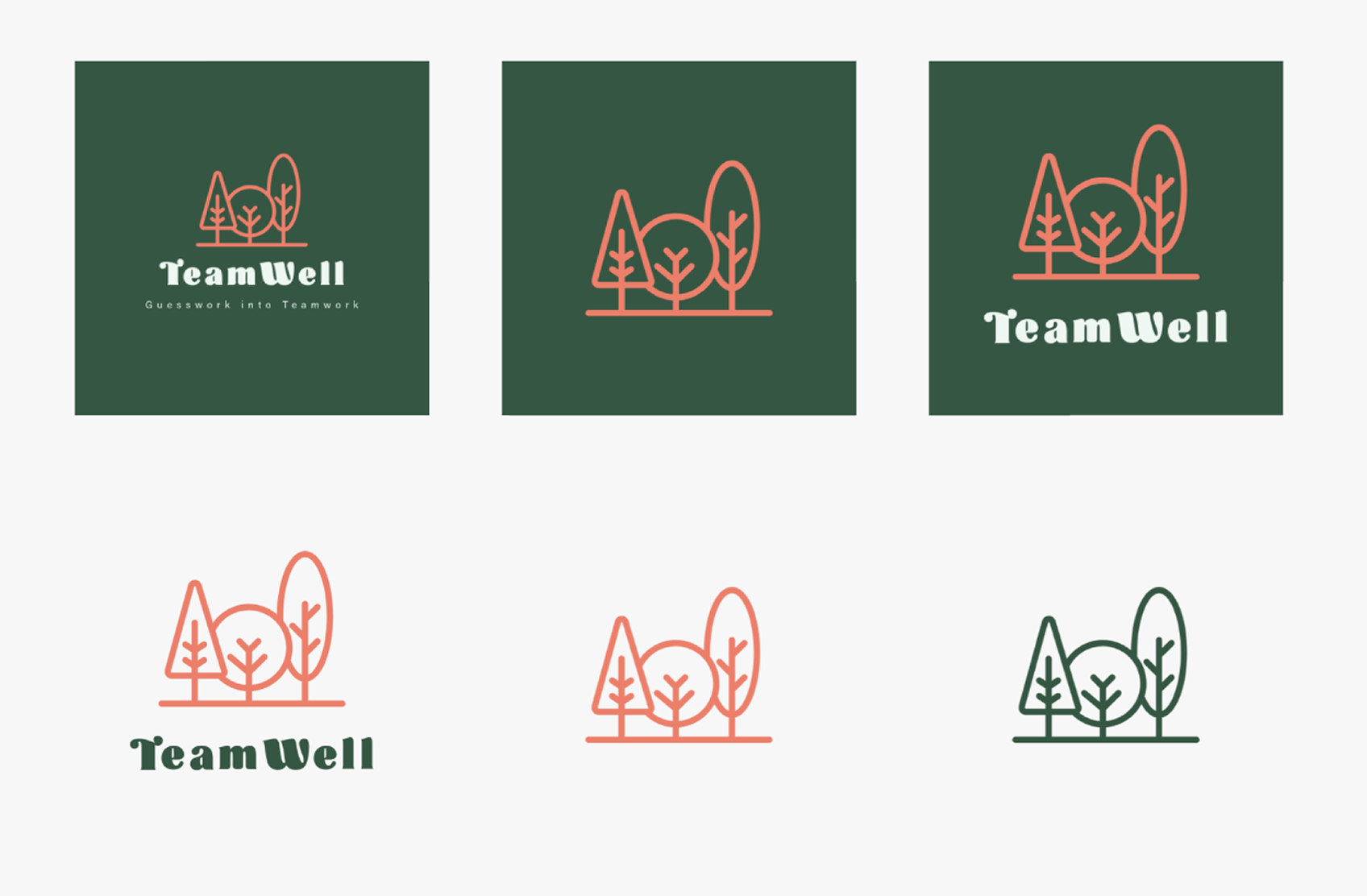
I chose TeamWell as the brand name to emphasize togetherness and health. It contains the implication that individual wellness is inextricable from team wellness.
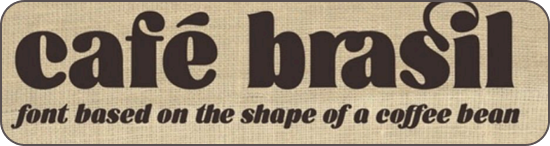
TeamWell’s logo communicates growing together, rooted in the same goals. I chose TeamWell’s brand typeface, Café Brasil, to add some fun. The intentional asymmetry and rounded letters feel casual and conversational.
Teamwork is key. We look out for each other’s wellbeing, share successes and growth opportunities, and listen obsessively. We are as reliable and trustworthy as they come, and we want to understand and support your team so you can support each other.
High-Fidelity Prototype
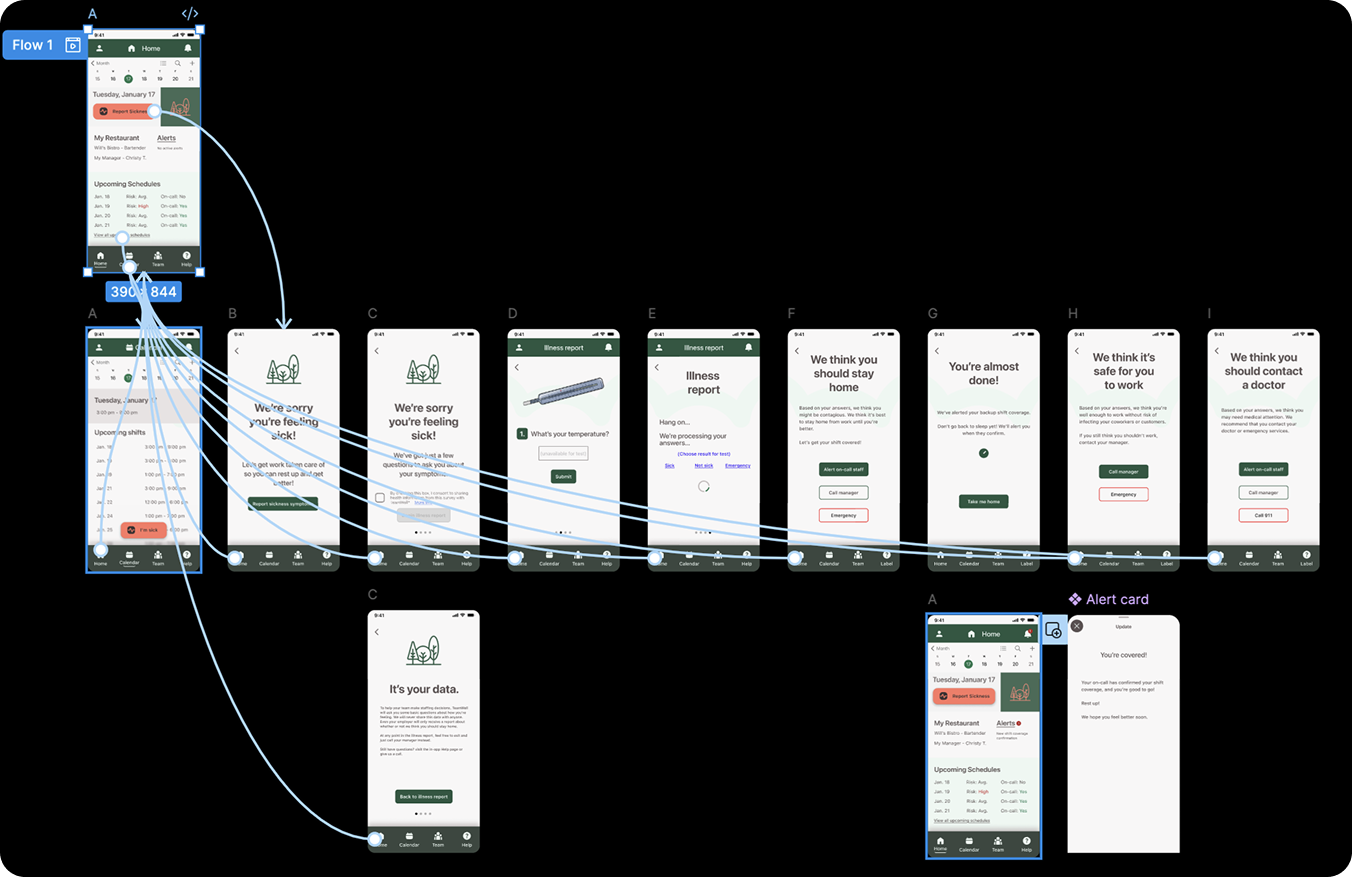
Illness report form prototype
This red route allows restaurant workers to report their sickness and receive advice about whether or not they are likely contagious and should work. If their form results indicate contagious sickness, they can alert their restaurant’s on-call staff member and cover their shift.
Testing & Iteration
Usability Testing
I conducted five remote, moderated usability tests of all three red route high-fidelity prototypes:
Login; Illness Report Form; Schedule an on-call
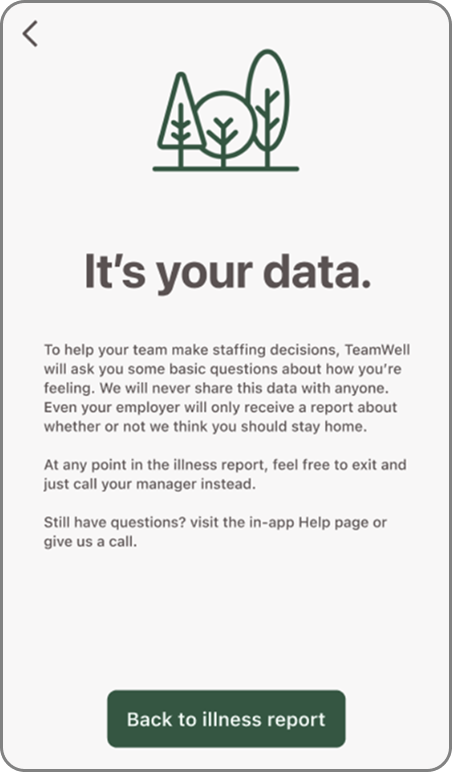
Usability testers shared that they wanted more information about why TeamWell was collecting their health information, what we would do with that information, and assurances that we wouldn’t share it with anyone else. Additionally, three of the five test users had assumed that a detailed breakdown of their questionnaire answers would be shared with their manager—something that concerned them.
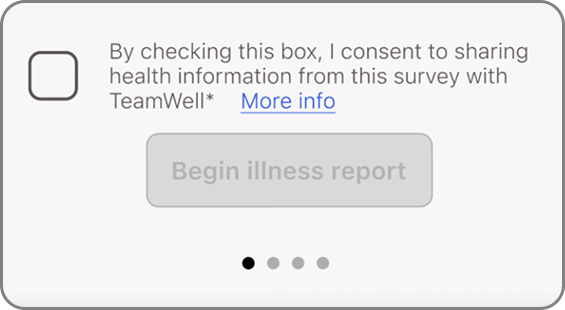
I added a popup card to the consent page, assuring users that their health data wouldn’t be shared with anyone else, even their managers! In the second round of usability tests, this was no longer an issue.
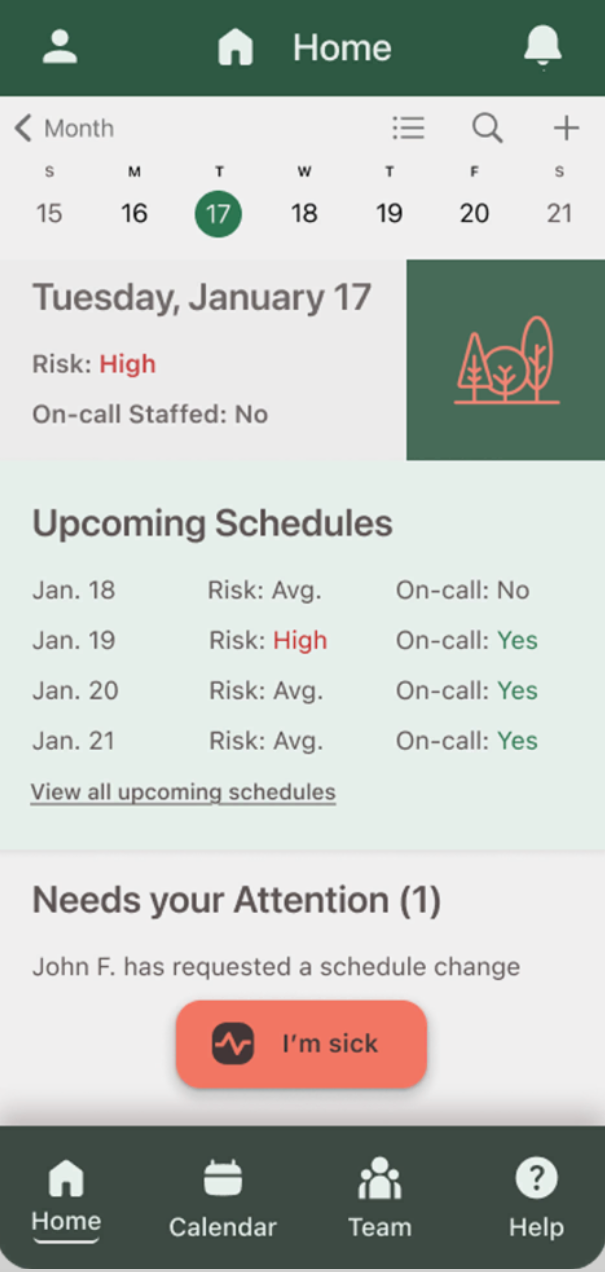
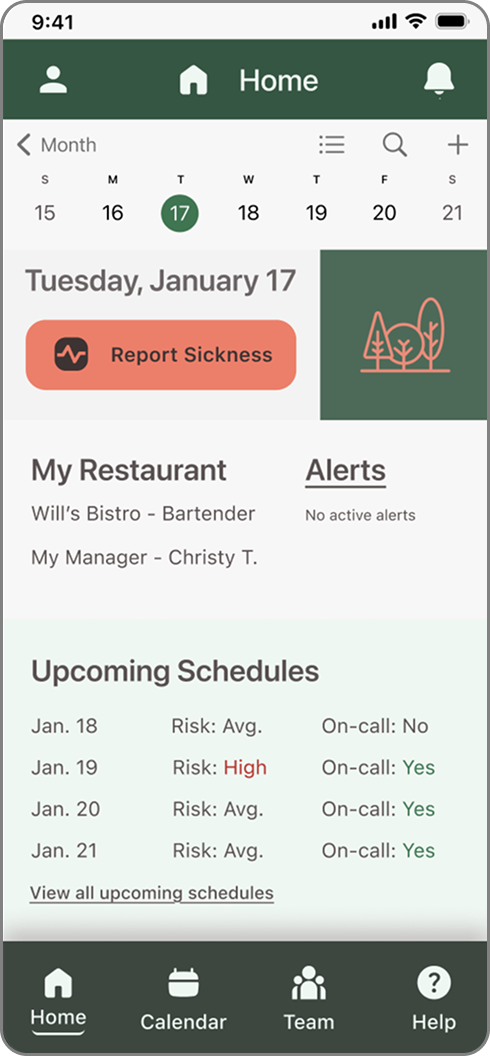
Usability testers also shared that when they first laid eyes on the employee home page, they experienced cognitive overload and had a hard time knowing “what to do first.” One user said, “why do I need all this information??”
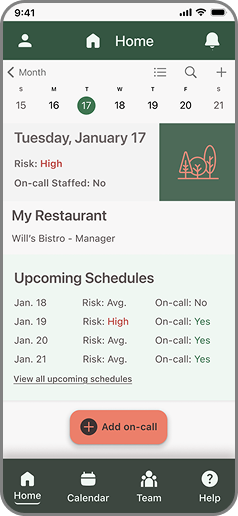
After some more questions and testing, it became clear that the issue was less about the “amount” of information, and more about its arrangement. The users’ task asked them to report their sickness. In the first iteration of the home page, this task could only be accomplished after scanning the entire page—a page including all sorts of dates, several “alerts,” the word “risk” highlighted in red, the logo, and all sorts of less relevant tools and information.
I moved the most important button to the top and rearranged the data displayed on the home page to increase clarity. As a result, the round-two usability testers accomplished their task faster and none reported feeing “overwhelmed” or “confused” by the home page.
Next Steps & Problems to be Solved
Honesty
There is currently little keeping users from lying on their illness report forms to get out of work. The solutions to this problem are likely to involve strategically designing the form to disincentivise abuse and scheduling on-call workers who have opted in to more work.
Integration & Revenge of the Badge!
With many successful staffing and schedule management apps already in the market, the most realistic opportunity for implementing this idea is as an integration with other products.
Data Security/Sensitivity
A common item of feedback I received from users involved data security, particularly as regards women’s health. There are plenty of legitimate health-related reasons to stay home from work that aren’t contagious or easily discussed with a manager. If handled properly, this could be an opportunity for TeamWell to build trusting relationships with users by handling these situations with care and facilitating effective communication between staff and managers.
Major Takeaways
1. Through this project, I had the opportunity to learn from real people about a problem I had experienced. But I only understood the problem from one point of view. Through strategic and goal-oriented research, listening, and analysis, trends and consistencies became clear.
Everyone in the restaurant industry works while they’re sick.
Everyone told me they did so because they didn’t want to let their team down.
Had I started the design process using only my own experience to guide me, I would have been trying to solve the wrong problem
2. This was my first go-round at UX design. I learned quickly that the work of properly planning, organizing, and researching a topic takes time and an investment of mental and emotional energy. Living thoughtfully in the world of my potential users allowed me to see the problem more empathetically and personally, identify trends among potential users, and ideate solutions appropriate for the real context of people working in the industry.